


Right Now

Navigating the Global Thermoplastic-Sheathed Cable Market: Strategic Trends and Commercial Opportunities (2026–2032)
The thermoplastic-sheathed cable market is entering a decisive growth phase, driven by a convergence of infrastructure renewal, regulatory modernization, and shifting supply chain dynamics. Valued at 38,450.12 million USD in 2020, the market expanded steadily to 52,150.0 million USD by 2025, reflecting a compound annual growth rate of 6.29 percent across the historical period. Looking ahead to 2032, the revenue trajectory points toward 79,981.05 million USD, underscoring sustained demand across residential, commercial, and industrial applications. This growth is not uniform; it is shaped by geopolitical trade shifts, material cost volatility, and evolving performance standards that are redrawing competitive boundaries.
For executives and investors tracking this sector, the immediate narrative is one of structural transition. The market is moving from a commodity-driven volume play toward a performance-and-compliance-driven value proposition. Companies that adapt to stricter flame retardancy, low-smoke zero-halogen requirements, and region-specific certification frameworks are gaining share, while those relying on legacy formulations face margin compression and regulatory friction. Below, the analysis unpacks the core challenges, demand drivers, competitive positioning, and forward-looking shifts that will define the market through the end of the decade.
Market Snapshot and Core Challenges
The global market has demonstrated resilience through cyclical demand fluctuations, with revenue growth guided by steady residential and commercial construction activity, alongside targeted industrial upgrades. The 2020–2025 historical period captured post-pandemic recovery, accelerated data center build-outs, and early-stage renewable energy integration. The 2026–2032 forecast window extends this momentum, but the path is increasingly shaped by regulatory divergence and supply chain realignment rather than straightforward volume expansion.
Medium Voltage Cable Market
Key Challenges and Inflection Points
Three structural challenges are reshaping how market participants plan capacity, sourcing, and product roadmaps.
- Regulatory fragmentation and compliance velocity. Standards such as IEC 60227-5 now govern thermoplastic-insulated cables rated up to 450/750V, with 2024 amendments reinforcing flame retardancy expectations. In parallel, regional specifications like AS/NZS 5000.2:2022 define performance criteria for Australian electrical installations. This patchwork increases certification lead times and pushes manufacturers to maintain multiple product variants, raising operational complexity and slowing time-to-market for new designs.
- Raw material cost sensitivity and formulation trade-offs. PVC resin prices, a critical input for thermoplastic sheathing, averaged 1,200 USD per metric ton in Q4 2025 amid stable supply from Asia. While the current pricing environment offers relative stability, the broader challenge is balancing cost efficiency with performance upgrades. The push toward low-smoke zero-halogen alternatives and enhanced fire resistance is pressuring formulators to invest in compound development, testing, and supplier qualification without eroding margins.
- Trade policy-driven sourcing shifts. US tariffs on Chinese thermoplastic cables increased to 25 percent under Section 301 in 2025, redirecting procurement toward Mexico and Vietnam. This restructuring improves diversification for buyers but introduces new qualification cycles, freight variability, and regional capacity constraints. Manufacturers with flexible footprint options and established regional supply relationships are better positioned to capture redirected demand.
These challenges are not merely operational nuisances; they are redirecting capital allocation, product strategy, and go-to-market models. The firms that treat compliance, material innovation, and geographic flexibility as strategic levers rather than cost centers will capture disproportionate share in the coming years.
Key Demand Drivers
Technological Innovation and Performance Differentiation
Product innovation is becoming a primary growth multiplier. Recent developments illustrate how performance enhancement is translating into new application windows. In October 2025, Prysmian Group showcased new thermoplastic-sheathed low voltage cables tailored for renewable energy at the Wire 2025 exhibition, signaling a shift toward specialized solutions that meet the reliability and safety demands of distributed generation and storage projects. In September 2025, Nexans launched enhanced thermoplastic-sheathed cables with improved fire resistance for building applications, directly addressing the growing emphasis on occupant safety and code compliance in dense urban environments.
These launches point to a broader trend: differentiation is increasingly anchored in safety, durability, and application-specific engineering rather than price alone. For manufacturers, the opportunity lies in pairing material science with clear value propositions that resonate with specifiers and end users. For buyers, it means evaluating total cost of ownership, including reduced rework risk, faster approvals, and alignment with future code trajectories.
Policy and Regulatory Tailwinds
Policy frameworks are actively reshaping demand patterns. The global push for energy-efficient buildings under the EU Green Deal is mandating low-smoke zero-halogen thermoplastic cables, boosting demand by an estimated 5–7 percent annually. This regulatory direction is not a one-off incentive; it is a structural shift that elevates baseline performance expectations across new construction and retrofit projects.
At the same time, updated standards and certification pathways are accelerating adoption of advanced formulations. The 2024 amendments to IEC 60227-5 and regional specifications are creating clearer benchmarks, which can reduce ambiguity for specifiers and speed procurement decisions when manufacturers have aligned products. For organizations operating across multiple jurisdictions, the strategic imperative is to build modular product architectures that can be certified efficiently across regions without diluting core performance.
Demand-Side Shifts in Construction and Infrastructure
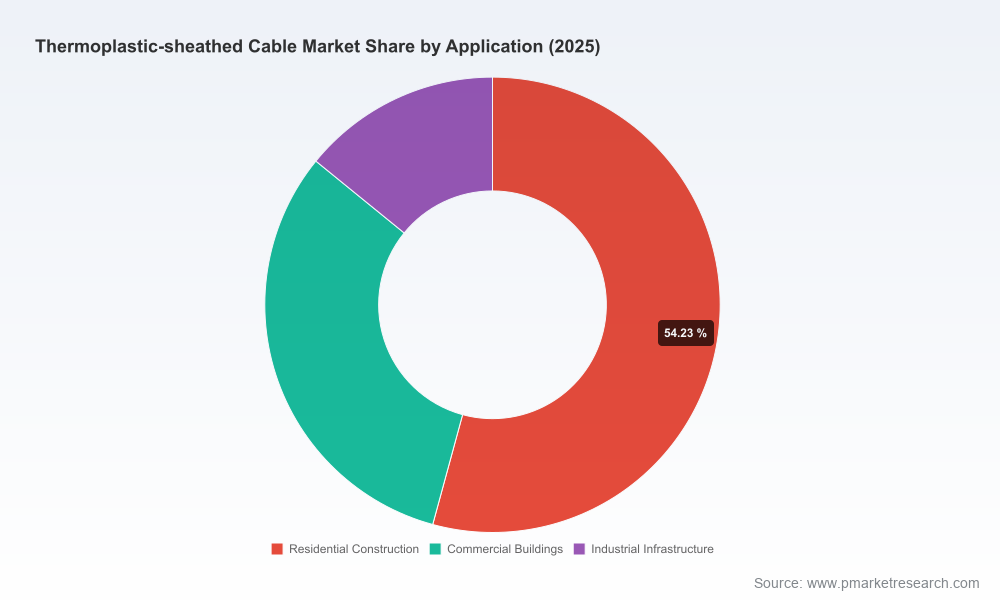
Demand is being reconfigured by the type, pace, and location of project activity. Residential construction remains a foundational volume driver, but the growth profile is increasingly complemented by commercial building modernization, data center expansion, and industrial infrastructure upgrades. The Australian data center project secured by LS Cable & System in April 2025 reflects a broader pattern: large-scale, technically demanding facilities are seeking suppliers who can deliver reliable power and control cabling at scale, with documented conformance to regional standards.
Behaviorally, specifiers and procurement teams are placing greater weight on fire performance, smoke emissions, and long-term reliability, especially in occupied buildings and mission-critical environments. This shift is encouraging earlier supplier engagement in the design phase and rewarding manufacturers that can provide robust technical documentation, testing evidence, and application support.
Supply Chain Reconfiguration and Cost Structure Dynamics
Supply chain strategy is now a competitive variable rather than a back-office function. The 25 percent tariff on Chinese thermoplastic cables in the US has accelerated sourcing migration to Mexico and Vietnam, which offers buyers tariff relief and geographic diversification but also requires new vendor qualification and logistics coordination. In parallel, stable PVC resin supply from Asia has helped moderate input cost volatility, though the broader cost structure remains sensitive to energy prices, freight dynamics, and the incremental cost of advanced compounds.
Manufacturers are responding by building regional capacity options, dual-sourcing critical inputs, and investing in process efficiency to protect margins while meeting higher performance thresholds. Buyers, in turn, are prioritizing suppliers with transparent cost structures, resilient logistics, and the ability to scale without compromising quality. The net effect is a market where supply chain agility increasingly determines who can capture demand during peak project cycles.
Competitive Landscape and Leading Strategies
The market is moderately concentrated, with the top three players holding roughly 18.45 percent and the top five approximately 24.8 percent of revenue. This structure indicates the presence of influential incumbents alongside a broad field of regional specialists and application-focused suppliers. The landscape is characterized by distinct strategic positions rather than a single dominant playbook.
PW Consulting
Strategic Positioning and Differentiation
Leading manufacturers are differentiating along three axes: application specialization, regional compliance depth, and product performance enhancement.
Thermoplastic Composites Market
- Global scale with application focus. Prysmian Group, headquartered in Milan, Italy, is a leading global manufacturer of thermoplastic-sheathed cables including TPS power cables for residential, commercial, and industrial applications compliant with AS/NZS 5000.2 standards. Its recent showcase of low voltage cables for renewable energy illustrates a strategy of aligning product development with high-growth, technically demanding segments while maintaining broad standards coverage.
- Distribution and building safety emphasis. Nexans, based in Paris, France, produces thermoplastic insulated and sheathed cables such as NYY and similar TPS types for power distribution, mining, and construction worldwide. The launch of enhanced fire-resistant building cables underscores a focus on compliance-driven value creation in construction and infrastructure markets.
- North American execution and certification agility. Southwire Company, located in Carrollton, USA, is a major US producer of thermoplastic-sheathed cables including THHN/THWN with PVC/thermoplastic sheathing for electrical installations. Its UL certification update for new SIMpull cables highlights the importance of rapid alignment with US market requirements and installer-friendly product design.
- Project-driven global reach. LS Cable & System, headquartered in Seoul, South Korea, supplies thermoplastic-sheathed power and control cables for global energy and infrastructure projects. Securing supply for an Australian data center project reflects a strategy centered on large, multi-stakeholder projects where reliability, documentation, and regional conformance are decisive.
- Diversified industrial and mobility portfolios. Sumitomo Electric Industries in Osaka, Japan, manufactures thermoplastic-insulated and sheathed cables for automotive, power, and industrial uses, while Furukawa Electric in Tokyo, Japan, produces PVC/thermoplastic sheathed cables for power transmission and distribution. Their positions illustrate how adjacent application expertise can create cross-selling opportunities and buffer cyclical demand in any single segment.
- Specialty and harsh-environment strengths. NKT A/S in Brøndby, Denmark, offers thermoplastic-sheathed medium and low voltage cables for offshore and onshore applications; Leoni AG in Nuremberg, Germany, specializes in thermoplastic-sheathed cables for automotive and industrial sectors; Belden Inc. in St. Louis, USA, provides thermoplastic-sheathed data, control, and power cables for harsh environments; and the Lapp Group in Stuttgart, Germany, is a global supplier of ÖLFLEX thermoplastic-sheathed cables for machinery and automation. These players differentiate through application-specific engineering, environmental resistance, and the ability to meet stringent operational requirements.
Market Structure Evolution
The competitive field is evolving through a combination of consolidation pressure, regional specialization, and targeted new entry. Moderate concentration suggests that scale confers advantages in procurement, certification throughput, and global project bidding, but it does not preclude successful niche players. Suppliers that excel in specific applications—such as renewable energy interconnects, data center power distribution, or automation and machinery cabling—can command premium positioning by solving technically constrained problems.
At the same time, trade policy and regional sourcing shifts are encouraging localized production and partnership models. Companies with flexible manufacturing footprints, strong regional compliance credentials, and reliable lead-time performance are likely to gain preference in markets where buyers are de-risking supply. New entrants that bring differentiated materials, faster certification pathways, or innovative installation features can carve out defensible positions, especially where incumbents are slow to adapt to updated fire and smoke requirements.
For decision makers, the practical implication is that supplier selection should factor in more than unit price. Compliance documentation, regional certification status, product roadmap alignment with upcoming code changes, and supply chain resilience are increasingly central to procurement decisions and risk management.
Future Trends and Commercial Opportunities
Trend 1: Performance Standards as a Market Filter
The trajectory of updated standards and building safety expectations is likely to function as a market filter over the next three to five years. As flame retardancy, low-smoke zero-halogen requirements, and regional conformance benchmarks become more entrenched, products that meet advanced specifications will command preference in higher-value segments. This creates opportunities for manufacturers that invest early in enhanced formulations, testing, and certification, and for buyers that standardize on solutions aligned with anticipated code trajectories to reduce future rework and replacement risk.
The upside is meaningful, but the risk is execution lag. Companies that treat performance upgrades as late-stage modifications rather than core design priorities may face certification delays, specification exclusions, and margin pressure as the market rewards compliant, future-ready solutions.
Trend 2: Regionalization of Supply and Sourcing Diversification
Trade policy and buyer risk tolerance are reinforcing a regionalization trend. The continued redirection of US procurement toward Mexico and Vietnam, alongside broader diversification in other markets, is likely to persist as organizations build resilience into their supply chains. This shift opens opportunities for manufacturers with proximate production capacity, flexible export capabilities, and strong logistics execution, as well as for suppliers in emerging sourcing hubs that can demonstrate consistent quality and certification readiness.
The commercial opportunity lies in pairing regional availability with technical reliability. Buyers are unlikely to switch sourcing solely for cost; they will favor suppliers that can combine competitive economics with dependable lead times, transparent documentation, and smooth qualification processes. The risk is that rapid diversification outpaces supplier readiness, creating bottlenecks during peak demand periods and increasing project delivery uncertainty.
Trend 3: Application Specialization as a Growth Engine
High-growth application areas are increasingly shaping demand composition. Renewable energy integration, data center expansion, energy-efficient commercial buildings, and industrial automation are all creating pockets of demand that reward specialized cable solutions. Manufacturers that develop targeted product families, supported by clear technical value propositions and application-specific testing, can capture share in segments where performance requirements are stringent and switching costs are higher.
This trend also creates a strategic opening for suppliers to move earlier in the project lifecycle, engaging with specifiers and engineering teams during design rather than competing primarily at the point of procurement. The risk is overextension; attempting to serve too many specialized segments without sufficient technical depth or production focus can dilute quality and slow responsiveness. Focused specialization, supported by clear market prioritization, is more likely to yield durable advantage.
Actionable Guidance for Decision Makers
For Manufacturers and Suppliers
Position product roadmaps around the performance and compliance trajectory rather than the current baseline. Prioritize formulations and certifications that align with updated flame retardancy expectations, low-smoke zero-halogen mandates, and regional standards such as AS/NZS 5000.2 and IEC 60227-5. Build modular product architectures that can be adapted across regions to reduce time-to-market and certification cost.
Strengthen supply chain flexibility by developing regional capacity options, dual-sourcing critical inputs, and maintaining transparent cost structures. In a market where tariffs and sourcing shifts are reshaping procurement, the ability to offer reliable lead times, documented quality, and smooth qualification processes is a competitive advantage. Finally, target high-growth application segments with focused solutions and early specifier engagement to capture projects where technical performance is a decisive factor.
For Investors
Evaluate exposure to companies that combine application specialization with scalable execution and regulatory alignment. Look for evidence of proactive certification strategies, product launches tied to renewable energy, building safety, and data center demand, and regional supply flexibility that mitigates trade-policy risk. Moderate market concentration suggests room for disciplined growth, but the more compelling thesis lies with organizations that can convert performance differentiation and supply agility into share gains in higher-value segments.
Monitor raw material dynamics, especially PVC resin pricing and regional supply conditions, as a key variable affecting margin stability. Equally important is tracking the pace of standards adoption across regions, since faster uptake of advanced performance requirements can accelerate demand for upgraded products while leaving slower-moving players exposed to specification exclusion.
For Procurement and Specification Teams
Expand evaluation criteria beyond unit price to include compliance readiness, fire and smoke performance, regional certification status, and supply chain resilience. Standardizing on solutions that align with anticipated code changes can reduce long-term risk and simplify multi-project procurement. Where sourcing is being redirected due to trade policy, prioritize suppliers with established qualification pathways, transparent documentation, and proven logistics execution to avoid delays during critical project phases.
Engage suppliers earlier in the design process for technically demanding projects such as data centers, renewable energy installations, and energy-efficient buildings. Early collaboration can improve specification accuracy, accelerate approvals, and ensure that selected products meet both current requirements and foreseeable performance expectations.
Conclusion
The thermoplastic-sheathed cable market is being reshaped by a clear set of forces: evolving safety and performance standards, policy-driven demand for energy-efficient building solutions, application specialization in high-growth segments, and a supply chain environment increasingly defined by regionalization and trade-policy shifts. The firms that will lead through 2032 are those that treat compliance, material innovation, and geographic flexibility as strategic capabilities, and that embed these capabilities into product architectures, certification pathways, and procurement relationships.
For executives, planners, and investors seeking segment-level data, regional demand detail, and tailored scenario planning, a comprehensive research report provides the depth required to translate these trends into specific actions. Detailed breakdowns of market sizing by segment and region, company-level competitive profiling, and forward demand scenarios can support more precise capacity planning, sourcing strategy, and investment allocation. Accessing that level of detail enables decision makers to move from broad directional insight to precise, executable strategy.
For detailed analysis of this topic, please visit the official page: Worldwide Thermoplastic-sheathed Cable Market
Lacy Lee
Senior Marketing Manager
sales@pmarketresearch.com
00852-95632430
PW Consulting: www.pmarketresearch.com
More Posts


Report This Post
Please complete the following requested information to flag this post and report abuse, or offensive content. Your report will be reviewed within 24 hours. We will take appropriate action as described in Findit terms of use.
