


Right Now

The TRIS Buffer Market: Strategic Trends and Commercial Opportunities Through 2032
1. Market Landscape and Core Challenges
The global TRIS buffer market has established a solid foundation of growth, with revenues expanding from approximately 238 million USD in 2020 to nearly 324 million USD in 2025. This trajectory reflects a compound annual growth rate of 6.32 percent, positioning the market for continued expansion through 2032. While the growth pace is steady, the market is entering a phase where incremental expansion is increasingly driven by structural shifts rather than uniform demand growth across all segments. The market's resilience underscores the essential role of TRIS buffers in life sciences, diagnostics, and biopharmaceutical manufacturing, yet the path forward demands careful navigation of emerging complexities.
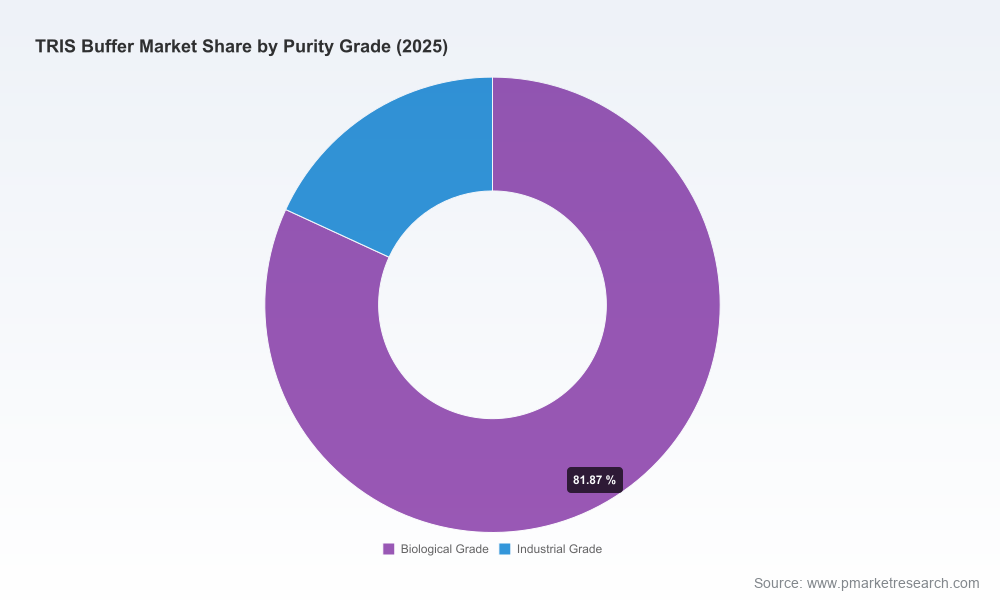
One of the most pressing challenges facing the industry is the intersection of supply chain dynamics and regulatory intervention. Production capacity for tris(hydroxymethyl)aminomethane has reached approximately 25,000 metric tons globally, with actual consumption estimated at 22,400 metric tons. While this indicates a relatively balanced supply-demand relationship, the concentration of biological-buffer applications accounting for the majority of total usage creates vulnerability to demand shocks and regional supply disruptions. Furthermore, nearly 29 percent of producers identify raw material cost fluctuations as a significant constraint on production and pricing stability, introducing margin pressure that must be managed through strategic procurement and pricing strategies.
A second critical challenge arises from the evolving regulatory landscape. The filing of antidumping and countervailing duty petitions on TRIS and TRIS HCl products from China, with alleged dumping margins reaching levels that could substantially impact import economics, introduces significant uncertainty for supply chains reliant on Asian manufacturing sources. This development signals a potential reconfiguration of trade flows and pricing dynamics, forcing companies to reassess sourcing strategies, evaluate alternative supplier qualifications, and consider the cost implications of geographic diversification. The regulatory action spans all grades, purities, and forms, indicating that the impact will be broad rather than isolated to specific product tiers.
A third challenge lies in the need to balance quality differentiation with cost efficiency. The market serves diverse applications ranging from nucleic acid analysis and protein purification to cell culture and biopharmaceutical manufacturing, each with distinct purity, consistency, and documentation requirements. Suppliers must maintain compliance with standards such as ACS grades, ISO 9001:2015, and multicompendial cGMP specifications where applicable, while simultaneously managing production costs in an environment of raw material volatility. Companies that fail to align quality systems with customer expectations risk loss of market share to competitors who can demonstrate reliable performance at competitive price points.
2. Key Drivers of Market Change
Technological Innovation and Product Development
Technological progress continues to shape the TRIS buffer market by expanding the applications for which high-quality buffers are essential. The commercialization of advanced crystal grades and the introduction of specialized buffer formulations demonstrate how manufacturers are moving beyond commodity production toward value-added solutions. For instance, the expansion of manufacturing capabilities in the United States to include additional buffer products reflects a strategic push to strengthen supply chain security for life science buffers while broadening the addressable market. Such developments enable customers to source multiple buffer types from integrated suppliers, reducing complexity and improving supply reliability.
Innovation in purity and analytical testing has also become a competitive differentiator. Suppliers offering bulk quantities with rigorous testing for contaminants such as DNase, RNase, protease, and heavy metals cater to the stringent requirements of cell culture media, diagnostic tests, and biochemical applications. The availability of such data and assurance levels supports customers in validating their own processes, particularly in regulated environments where traceability and quality documentation are critical. This trend reinforces the shift from viewing TRIS buffers as interchangeable commodities to recognizing them as components whose specifications directly impact downstream performance.
Policy and Regulatory Environment
Policy developments are exerting a growing influence on market dynamics, particularly through trade enforcement actions and quality standard requirements. The antidumping and countervailing duty petitions initiated in April 2026 highlight how regulatory measures can alter the competitive landscape by changing relative pricing across sourcing regions. For companies operating in or serving the North American market, this creates both risks and opportunities. Import-dependent supply chains may face cost increases, while domestic or alternative-region producers may gain relative advantage. At the same time, the broadening enforcement across all grades and forms means that the impact will not be limited to a narrow segment of the market.
Beyond trade actions, regulatory expectations around quality standards continue to evolve. The requirement for products to meet ACS, ISO 9001:2015, and multicompendial cGMP grades depending on the application drives investment in quality management systems, testing capabilities, and documentation. Suppliers that proactively align with these expectations position themselves to capture demand from customers in biopharma, diagnostics, and research environments where quality assurance is non-negotiable. The regulatory environment thus acts as both a barrier to entry and a mechanism for rewarding operators with robust quality infrastructure.
Demand-Side Shifts in Life Sciences and Biopharma
Demand growth is being driven by sustained expansion in life science research, diagnostics, and biopharmaceutical manufacturing. The essential use of TRIS buffers in nucleic acid analysis, protein purification, cell culture, and biopharmaceutical manufacturing reflects the broader growth of these end markets. As research and development activities increase globally, the volume and consistency requirements for buffers rise in parallel. In particular, biopharmaceutical manufacturing and advanced therapy development create demand for buffers that meet stringent quality and documentation standards, often at higher purity grades and with reliable batch-to-batch consistency.
Customer behavior is also shifting toward supply reliability and partnership models. Organizations are increasingly prioritizing suppliers who can guarantee continuity of supply, provide technical support, and offer flexibility in packaging and delivery. The demand for bulk quantities with analytical testing documentation indicates that customers are seeking to reduce risk in their own supply chains by engaging with suppliers who can provide transparency and quality assurance. This preference for reliability over the lowest possible price creates openings for suppliers with strong production capacity, multiple manufacturing sites, and demonstrated quality credentials.
PW Consulting
Supply Chain and Cost Structure Dynamics
Cost structure dynamics are a central driver of strategic decision-making in the TRIS buffer market. With nearly 29 percent of producers reporting raw material cost fluctuations as a significant constraint, managing input costs has become a priority for maintaining margin stability. The global production capacity of approximately 25,000 metric tons and consumption of around 22,400 metric tons suggest that the market is operating close to capacity, which can amplify the impact of input cost changes on pricing and availability. In such an environment, suppliers with vertically integrated operations or dual-site production capabilities may have advantages in managing supply risks and controlling costs.
Supply chain security is increasingly valued by customers, as evidenced by the expansion of manufacturing and distribution arrangements in key regions. The strengthening of North American distribution agreements and the expansion of European manufacturing capacity for buffer preparation-related products reflect efforts to mitigate regional supply vulnerabilities. These moves indicate that both suppliers and customers are investing in geographic diversification and local or near-local production to reduce exposure to trade disruptions, logistics delays, and regulatory uncertainties. The result is a market environment where supply chain resilience is becoming a competitive differentiator alongside price and quality.
3. Competitive Landscape and Leadership Strategies
The TRIS buffer market features a mix of global specialty chemical and life sciences companies alongside regional manufacturers with strong positions in specific geographies. Leading players have developed strategic positions that combine production scale, product breadth, quality credentials, and, in some cases, vertical integration. This diversity creates a competitive environment where differentiation is achieved through a combination of cost efficiency, quality assurance, supply reliability, and customer service.
Advancion Corporation stands out as the world's only fully integrated manufacturer of TRIS AMINO and TRIS HCl buffers, operating dual-site production in the United States and Germany. This geographic diversification supports supply chain security and serves customers across multiple regions. The company's offer of Standard, ACS, and advanced crystal grades for bioprocessing and life sciences under ISO 9001:2015 reflects a focus on quality and product range. Recent capacity expansion in the United States and the expansion of a North American distribution agreement for TRIS AMINO buffers indicate a strategy aimed at strengthening market presence and supply reliability. The subsequent antidumping and countervailing duty petitions against Chinese TRIS products further highlight the company's engagement with trade dynamics and its potential interest in protecting its North American market position.
Global suppliers such as Merck KGaA (Sigma-Aldrich), Thermo Fisher Scientific, Avantor, and Bio-Rad Laboratories compete through broad product portfolios, established distribution networks, and strong brand recognition in life sciences and research. These companies offer TRIS buffers, solutions, and related reagents for electrophoresis, chromatography, ELISA, molecular biology, and bioprocessing applications. Their scale, customer base, and ability to bundle buffers with other reagents and instruments create advantages in serving research and biopharmaceutical customers who value convenience, reliability, and technical support. Avantor's expansion of European manufacturing capacity for buffer preparation-related products, including USP purified water and WFI-based solutions, demonstrates a commitment to supporting buffer preparation workflows and reinforcing its position in the European market.
Regional manufacturers including Hopax Fine Chemicals, Suzhou Yacoo Science, Jiangsu Tianjiayi Chemical, Desheng, and FUJIFILM Wako Pure Chemical Corporation play important roles in serving specific geographies and applications. Hopax supplies TRIS and TRIS HCl buffers with analytical testing for contaminants, targeting cell culture media, diagnostic tests, and biochemical applications, and offers bulk quantities. Suzhou Yacoo and Jiangsu Tianjiayi focus on biological buffer applications with significant production capacity, supporting global and domestic demand. Desheng serves a global customer base with TRIS base biological buffers, while FUJIFILM Wako offers a range of TRIS-based buffers for life science research in the Japanese market. These companies compete on cost, regional proximity, and the ability to meet specific purity and documentation requirements, often serving customers who seek reliable supply at competitive prices.
Bio Pharma Buffer Market
The competitive landscape is evolving through a combination of consolidation and differentiation. Larger global players are strengthening their positions through capacity expansions, distribution agreements, and product portfolio breadth. At the same time, regional and specialized manufacturers are maintaining relevance by offering competitive pricing, tailored product specifications, and responsiveness to local market needs. The recent trade actions introduce the potential for further shifts, as sourcing patterns adjust to new cost structures. New entrants may find opportunities in niche segments or regions where incumbents face capacity constraints or trade-related challenges, but success will depend on the ability to meet quality standards and establish reliable supply relationships.
4. Future Outlook: Trends and Opportunities
Trend 1: Supply Chain Reconfiguration Driven by Trade and Resilience Priorities
Over the next three to five years, the TRIS buffer market is likely to experience continued supply chain reconfiguration as trade measures, cost considerations, and resilience priorities reshape sourcing patterns. The antidumping and countervailing duty petitions against Chinese TRIS products, combined with the existing capacity constraints and raw material cost volatility, suggest that buyers will increasingly diversify their supplier base across regions. This trend creates opportunities for manufacturers with production capabilities in the United States, Europe, and other regions that may benefit from reduced exposure to trade barriers. Companies that can demonstrate multi-site production, reliable quality, and transparent pricing will be well positioned to capture demand from customers seeking to de-risk their supply chains.
At the same time, this trend introduces risks for organizations that rely heavily on single-region sourcing. The potential for tariffs and adjusted trade flows could lead to price volatility and availability challenges. Buyers should anticipate the need to qualify alternative suppliers, assess lead times, and evaluate total cost of ownership rather than focusing solely on unit price. Suppliers, on the other hand, should consider how their geographic footprint and trade exposure affect their competitiveness and whether investments in production capacity or distribution partnerships can strengthen their position.
Balanced Salt Buffer Solution Market
Trend 2: Growing Emphasis on Quality Differentiation and Application-Specific Solutions
As end-market demand in biopharma, diagnostics, and advanced research grows, the value of quality differentiation and application-specific buffer solutions is expected to increase. Customers are likely to place greater weight on purity, consistency, documentation, and testing data when selecting suppliers, particularly for regulated applications where buffer performance directly impacts product quality or process validation. The trend toward cGMP compliance, ACS and ISO standards, and contaminant testing reflects this shift and is likely to intensify.
This creates opportunities for suppliers that can provide clear quality assurances, technical support, and customization where needed. Companies offering standard and advanced crystal grades, with rigorous analytical testing and documentation, can command premiums and build long-term customer relationships. Conversely, suppliers that compete primarily on price without adequate quality differentiation may face margin pressure and loss of share to competitors with stronger quality credentials. The commercial opportunity lies in aligning product development and quality systems with the requirements of high-value applications, while maintaining cost efficiency for more commoditized segments.
Trend 3: Capacity Expansion and Geographic Balancing to Meet Demand Growth
The market's growth trajectory, with projected revenues reaching approximately 498 million USD by 2032, implies the need for continued capacity investment and geographic balancing. The current production capacity of approximately 25,000 metric tons and consumption of around 22,400 metric tons suggest that while supply is adequate, growth in biological-buffer applications and other segments may tighten availability in certain regions or product categories. Recent capacity expansions and distribution agreements indicate that leading companies are already responding to this dynamic by increasing production capabilities and strengthening market access.
This trend presents opportunities for manufacturers to invest in capacity where demand growth is strongest and where trade dynamics favor local or regional production. It also creates opportunities for investors and partners to evaluate companies with strong capacity pipelines, diversified geographic footprints, and strategies to manage raw material cost volatility. However, the risk of overcapacity in some segments or regions should be monitored, as not all capacity expansions will align with demand growth. Strategic capacity planning and market intelligence will be essential to ensure that investments generate sustainable returns.
5. Strategic Actions for Decision Makers
For manufacturers, the priority is to strengthen supply chain resilience and quality differentiation while managing cost structures. Companies should evaluate the geographic diversification of their production and distribution footprints in light of trade developments and customer preferences for reliability. Investment in quality systems, testing capabilities, and documentation that meet the expectations of biopharma, diagnostics, and research customers can create competitive advantage and support pricing power. At the same time, proactive management of raw material procurement and cost volatility is essential to maintain margin stability. Manufacturers should also consider strategic partnerships or distribution agreements that extend market reach and improve supply security, particularly in regions where trade dynamics are shifting.
For investors, the focus should be on identifying companies with sustainable competitive advantages in quality, capacity, and geographic positioning. Opportunities may arise in businesses that are expanding capacity in regions with favorable trade dynamics, diversifying production across multiple sites, and investing in quality and product breadth to capture higher-value applications. Investors should also monitor the impact of trade enforcement actions on supply chains and pricing, as these dynamics can create both risks and opportunities depending on a company's exposure and strategy. Due diligence should include assessments of production capacity relative to demand growth, raw material cost management, regulatory compliance, and the ability to serve key end markets with differentiated products.
For procurement and supply chain leaders, the key is to balance cost considerations with supply reliability and quality assurance. Given the evolving trade environment and raw material cost volatility, organizations should diversify their supplier base across regions and evaluate suppliers based on total cost of ownership, quality documentation, and supply continuity. Qualifying alternative sources, understanding lead times, and building relationships with suppliers that have strong quality systems and transparent pricing can reduce risk and improve negotiation leverage. Procurement teams should also engage with technical and quality teams to ensure that buffer specifications align with application requirements and that any changes in supplier or grade are validated appropriately.
The TRIS buffer market is entering a period where strategic positioning, supply chain resilience, and quality differentiation will determine competitive outcomes. The combination of steady demand growth, regulatory dynamics, cost pressures, and geographic shifts creates a complex environment that rewards organizations with clear strategies and up-to-date market intelligence. For those seeking deeper segmentation data, regional breakdowns, and tailored strategic recommendations, the full research report provides comprehensive analysis to support decision-making across procurement, investment, and operational planning.
For detailed analysis of this topic, please visit the official page: Worldwide TRIS Buffer Market
Lacy Lee
Senior Marketing Manager
sales@pmarketresearch.com
00852-95632430
PW Consulting: www.pmarketresearch.com
More Posts


Report This Post
Please complete the following requested information to flag this post and report abuse, or offensive content. Your report will be reviewed within 24 hours. We will take appropriate action as described in Findit terms of use.
