

Right Now

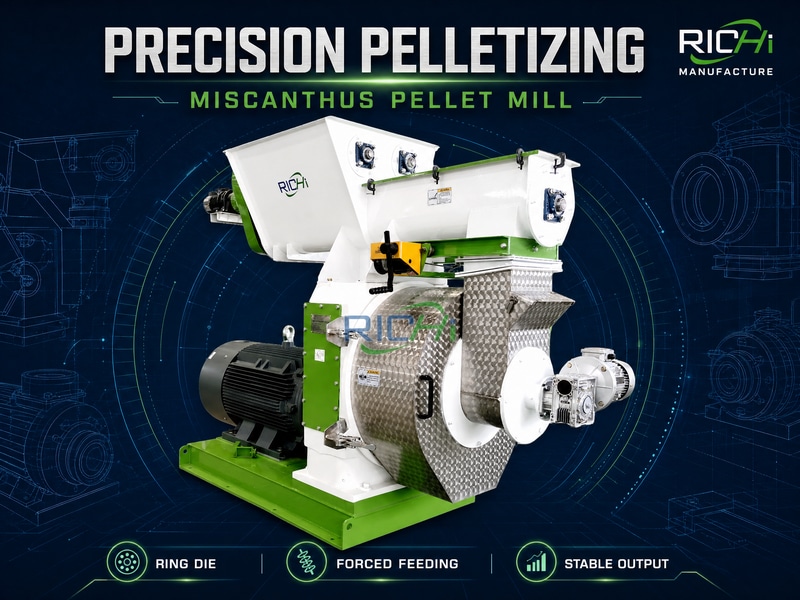
Small Miscanthus Pellet Mill for Seasonal Biomass
Working With a Seasonal Crop
A major challenge for many biomass businesses is that raw material availability does not always match fuel demand. A small miscanthus pellet mill can help address this gap by converting harvested biomass into a more convenient product that can be stored for later use.
However, installing the pellet mill does not solve the seasonal problem by itself. The project needs a strategy for harvesting, storage, preparation, production, and finished-pellet inventory.
Storage Begins Before Pelletizing
Miscanthus may be harvested during a particular season, while customers may require fuel throughout the year. This means that raw material storage can be just as important as production capacity.
Stored biomass should be protected from excessive moisture and conditions that can cause deterioration. The storage method should also allow material to be retrieved consistently for processing.
A small facility does not necessarily need a huge warehouse, but its available storage should correspond to the intended operating schedule.
Production Scheduling
A small pellet mill can be operated according to material availability. Instead of producing continuously throughout the year, a producer may operate intensively during periods when raw material is readily available and then sell from finished inventory later.
Alternatively, stored raw material can be processed gradually according to customer demand.
The better strategy depends on storage cost, electricity rates, labor availability, customer requirements, and the condition of the biomass.
Moisture Can Change During Storage
One important consideration is that biomass properties can change during storage. Moisture can increase or decrease depending on environmental conditions and storage protection.
Therefore, operators should not assume that material leaving storage will have exactly the same characteristics as when it entered.
Before pelletizing, the material may need inspection and adjustment. Consistent preparation helps maintain more stable pellet production.
Matching the Production Line
A small project does not always require a large number of machines, but each stage should support the next one. Crushing, drying, feeding, pelletizing, cooling, and storage should be balanced.
If the pellet mill can produce faster than the dryer can prepare material, the mill will spend time waiting. If the pellet mill is faster than the cooler or packaging stage, finished pellets may accumulate unnecessarily.
This is why the concept of a grass pellet production line is useful even when designing a smaller biomass system. The entire process should be considered as one connected production chain.
Inventory and Customer Planning
Finished-pellet inventory should be based on realistic sales expectations. Producing too much without confirmed demand ties up capital and storage space.
On the other hand, insufficient inventory during periods of high demand can lead to missed sales.
A simple production record can help track raw-material consumption, finished output, inventory levels, and customer orders. Over time, this information makes seasonal planning more accurate.
Preparing for the Next Season
After one production cycle, the operator should evaluate what worked and what did not. Problems with raw-material storage, moisture, equipment capacity, packaging, or customer delivery can then be corrected before the next season.
Seasonal biomass production becomes easier to manage when each cycle generates better information.
Those researching equipment specifications can use a blog here as a starting point.
While comparing a suitable pellet machine for sale should include not only machine capacity but also the seasonal characteristics of the entire production system.
More Posts





Report This Post
Please complete the following requested information to flag this post and report abuse, or offensive content. Your report will be reviewed within 24 hours. We will take appropriate action as described in Findit terms of use.
