

Right Now

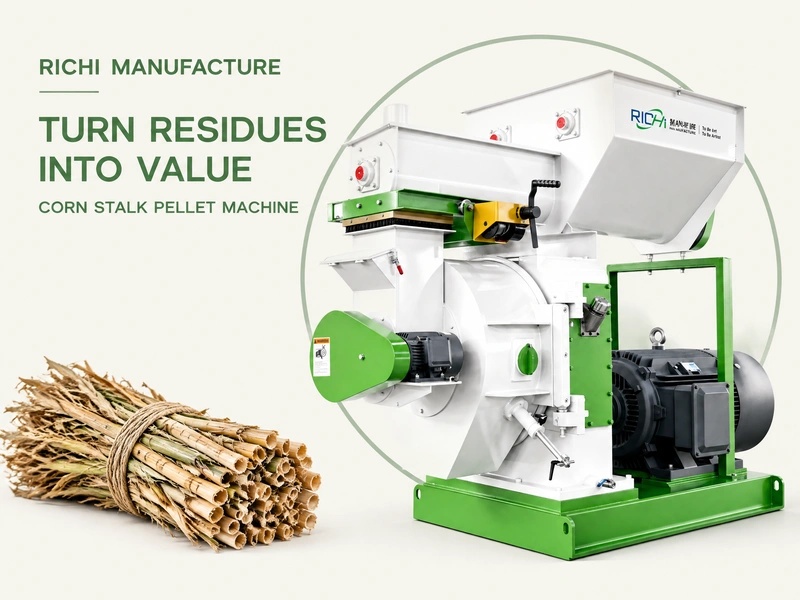
What Affects the Cost of a Corn Stalk Pellet Production Line?
The cost of a pellet project cannot be understood by looking at the pellet mill alone. A complete production system contains several stages, and each stage contributes to the investment. For investors processing corn stalks, understanding these cost factors before requesting quotations can make financial planning much more accurate.
View details:
Capacity Determines the Basic Scale
Production capacity is one of the first factors affecting investment. A small operation may only require limited preparation and handling equipment, while a commercial factory needs larger machines and more continuous material flow.
Capacity should be selected based on realistic feedstock supply and market demand. Building a large plant without enough material or customers can result in poor equipment utilization.
The Pellet Machine Is Only One Cost
When comparing straw pellet machine price, buyers sometimes focus on the main pelletizing unit because it is the most recognizable piece of equipment.
However, corn stalks may require crushing, drying, conveying, feeding, cooling, screening, and packaging. If these systems are needed, their cost must be included in the overall project budget.
Raw Material Preparation
Corn stalks collected directly from agricultural fields can vary considerably in physical condition. Long pieces need to be reduced in size before entering the pelletizing stage. Moisture may also need to be adjusted.
The required preparation equipment depends on the actual feedstock. A factory processing relatively dry and well-prepared material may need a simpler system than one receiving wet, bulky residues.
Drying Can Change the Budget
Drying is one of the stages that can significantly influence both capital and operating costs. If incoming biomass has high moisture, a dryer and associated material-handling system may be necessary.
The energy source, dryer capacity, target moisture, and operating schedule all affect the economics of drying. It should therefore be evaluated before the final line configuration is selected.
Automation and Labor
Labor requirements also influence the long-term cost of a project. Manual handling may reduce the initial equipment investment, but it can increase labor requirements and make high-volume production more difficult.
Automation requires additional capital but can improve material flow and reduce repetitive work. The appropriate level depends on local labor costs and the expected production schedule.
Factory Infrastructure
The building and infrastructure should also be considered. Foundations, electrical systems, storage areas, ventilation, material transfer routes, and finished-product handling can all add to the investment.
A machine may have an attractive purchase price but require expensive site modifications if the factory was not prepared for its installation.
Maintenance and Spare Parts
A pelletizer operates under mechanical pressure and requires regular inspection. Wear parts such as dies and rollers need to be maintained and eventually replaced.
A realistic project budget should include expected spare-parts consumption and routine maintenance. This is especially important when the factory is expected to operate for long hours.
Compare Complete Configurations
He has a good point when emphasizing that quotations should be compared by scope rather than headline price. Two suppliers may offer different equipment packages even though both describe their systems using similar capacity figures.
The buyer should confirm what equipment, controls, installation support, spare parts, and technical services are included.
Calculate Long-Term Value
The lowest initial investment is not always the lowest overall cost. Energy consumption, maintenance, downtime, labor, product losses, and equipment lifespan all affect total ownership cost.
A slightly higher-quality system may provide greater value if it remains reliable and easier to maintain.
Make the Budget Match the Business
A corn stalk pellet project should be financially planned around realistic production rather than an idealized maximum. Understanding the complete cost structure allows investors to choose equipment and capacity that fit their actual business model.
More Posts





Report This Post
Please complete the following requested information to flag this post and report abuse, or offensive content. Your report will be reviewed within 24 hours. We will take appropriate action as described in Findit terms of use.
