


Right Now

Global Telecom Security Software: Navigating Growth, Fragmentation, and the 5G Security Mandate
The worldwide market for security software in telecommunications is undergoing a structural transformation. Fueled by rapid network modernization, expanding threat surfaces, and shifting business models among operators, the sector has evolved from a niche compliance requirement into a core infrastructure priority. Revenue for security software deployed across telecom networks, services, and connected endpoints has expanded consistently over the past half-decade, reaching an estimated 15.57 billion USD in 2025. Looking ahead through 2032, the market is projected to surpass 36.65 billion USD, underpinned by a compound annual growth rate of roughly 13 percent. This trajectory reflects not merely incremental demand but a fundamental reorientation of how telecom operators, enterprises, and regulators view network integrity, subscriber protection, and digital sovereignty.
Understanding the Current Market Landscape
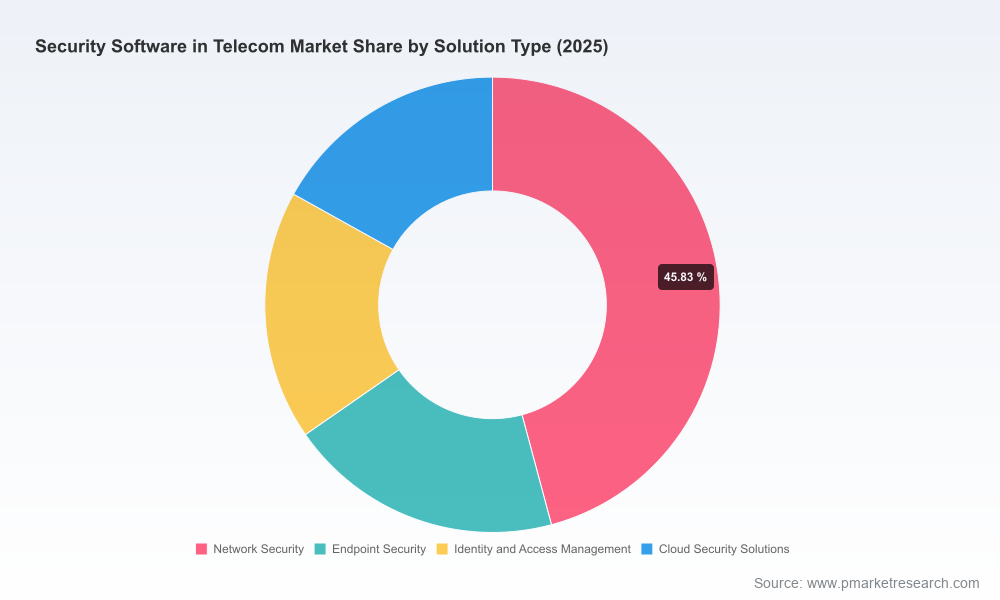
Telecom security software now spans a broad spectrum of capabilities: protecting core and radio access networks, securing cloud-native deployments, managing identity and access across distributed infrastructures, and defending endpoints and subscribers from increasingly sophisticated attacks. The category has matured beyond traditional perimeter defenses. Operators are integrating security into network slicing, edge compute environments, and B2B service portfolios, while sovereign and regional frameworks are redefining acceptable risk thresholds. The result is a market where growth is distributed across multiple solution types and deployment models, with cloud-based architectures steadily gaining share alongside persistent on-premise requirements for latency-sensitive or regulated environments.
Several structural tensions define the present moment. First, legacy network elements coexist with virtualized and cloud-native architectures, creating hybrid attack surfaces that complicate visibility and policy enforcement. Second, the speed of technology adoption frequently outpaces the availability of standardized security frameworks, leaving operators to navigate overlapping vendor solutions and conflicting compliance expectations. Third, the broadening of telecom security beyond pure connectivity into managed security services and edge-enabled protection has blurred traditional vendor boundaries, intensifying competition and raising the bar for integration depth.
PW Consulting
Key Drivers Shaping Demand and Investment
Technological innovation remains the most visible catalyst. The rollout and optimization of 5G architectures have introduced new security requirements around network slicing isolation, service-based interfaces, and low-latency threat response. Cloud-native core networks and edge compute deployments demand security controls that can scale elastically while maintaining strict separation between tenants and services. At the same time, artificial intelligence is reshaping both attack methods and defensive capabilities. Machine learning-driven anomaly detection, automated policy tuning, and AI-assisted incident triage are becoming differentiators, while adversaries increasingly exploit automation and generative techniques to probe network weaknesses at scale.
Policy and regulatory environments are exerting equally powerful influence. Governments and regional bodies are advancing cybersecurity mandates, trusted vendor considerations, data localization requirements, and digital sovereignty frameworks that directly affect how telecom infrastructure is designed and secured. In Europe, regulatory simplification and next-generation network investment initiatives are being paired with explicit cybersecurity and sovereignty expectations, while parallel efforts elsewhere are shaping procurement criteria and architectural choices. These dynamics are not purely restrictive; they are also creating structured demand for compliant security software, auditable configurations, and regionally adaptable deployments.
Demand-side behavior is shifting as well. Telecom operators are increasingly positioning themselves as technology companies rather than pure connectivity providers, expanding B2B portfolios to include cybersecurity services alongside cloud, IoT, and managed network offerings. This transition reflects both revenue diversification goals and customer expectations: enterprises consuming telecom services increasingly expect embedded security, visibility, and managed protection as part of the service contract. On the consumer side, growing dependence on mobile connectivity for work, finance, and critical communications has elevated expectations for network-level threat protection and subscriber-level security features.
Cost structures and supply chain considerations add another layer of pressure. Security software is no longer evaluated solely on feature breadth; operators and enterprises weigh integration complexity, operational overhead, performance impact on high-throughput networks, and the total cost of maintaining multi-vendor environments. The drive toward consolidated platforms, fabric-based architectures, and automation-friendly controls reflects a broader effort to reduce operational strain while improving coverage. At the same time, supply chain resilience and vendor flexibility are becoming more prominent in procurement decisions, especially where geopolitical or regulatory factors influence sourcing strategies.
Competitive Landscape and Strategic Positioning
The competitive field combines established network and security vendors with specialists focused on telecom-specific threat surfaces and infrastructure protection. Large platform vendors bring breadth, brand recognition, and integrated ecosystems that span firewalls, cloud security, identity, and threat intelligence. Their advantage lies in offering unified management, cross-domain visibility, and the ability to align security with broader network and cloud roadmaps. Several of these players are actively extending their reach into telecom-specific environments, tailoring products for service provider architectures, 5G integration, and sovereign AI security frameworks.
Regulatory-aligned innovation is becoming a strategic differentiator for leading vendors. Recent ecosystem expansions illustrate how security providers are pairing technology with regional and operator-specific requirements. For example, collaborative announcements at major industry events have highlighted partnerships aimed at protecting AI factories within telecom networks and supporting sovereign AI security frameworks, signaling a move toward integrated, operator-aligned security architectures rather than standalone product sales. Similarly, platform updates have emphasized secure AI controls, fabric-based agents, flexible SASE, and simplified SD-WAN for hybrid telecom environments, reflecting the growing importance of adaptive, automation-ready security in high-performance networks.
Infrastructure-centric vendors are reinforcing their role by embedding security into the network itself. Their strategies often revolve around securing the core, transport, and radio access layers, with solutions designed to protect network slicing, manage cryptographic transitions, and provide centralized security management for operator environments. This embedded approach appeals to operators seeking tighter alignment between security and network operations, particularly where performance, latency, and scale are critical.
Worldwide Information Security Market
Specialized telecom security providers occupy a distinct and increasingly valuable position. By focusing on mobile network signaling, traffic management, DDoS protection, subscriber security, and attack simulation for legacy and next-generation protocols, these companies address nuances that broader platforms may treat only partially. Their depth in telecom-specific attack vectors and operational contexts makes them attractive partners for operators seeking targeted protection, validation, and monitoring capabilities. The presence of regional and focused players also supports a competitive dynamic in which differentiation comes from domain expertise, integration precision, and adaptability to local regulatory and network conditions.
Market concentration remains moderate, indicating that leadership is distributed rather than dominated by a single vendor bloc. This fragmentation creates room for consolidation, partnerships, and platform convergence. Over time, the landscape is likely to see further integration among vendors that can combine network, cloud, identity, and threat intelligence into coherent operational experiences, while specialized firms may either deepen niche leadership or become acquisition targets for larger platforms seeking telecom-specific depth. New entrants continue to emerge where AI-driven automation, sovereign security requirements, or emerging network paradigms create unmet needs.
Forward-Looking Trends and Commercial Opportunity
One of the most consequential trends for the next three to five years is the convergence of AI-driven security operations with telecom network management. As networks become more software-defined and distributed, manual tuning and siloed tools will become unsustainable. Vendors and operators that can deliver automated anomaly detection, policy orchestration, and closed-loop remediation will gain operational leverage. This trend opens opportunities for platforms that reduce alert fatigue, accelerate incident response, and align security actions with network performance objectives. The commercial upside lies not only in selling software but in enabling measurable reductions in operational complexity and mean time to containment.
A second major trend is the deepening alignment between cybersecurity and telecom business models. Operators are expected to continue expanding security as a service line, embedding protection into connectivity, edge, and managed service offerings. This creates demand for scalable, multi-tenant security software that can be packaged, monetized, and delivered consistently across customer segments. For vendors, the opportunity is to provide operator-ready architectures that support service differentiation, white-label or co-branded models, and flexible deployment across core, edge, and cloud environments. The strategic value extends beyond immediate revenue: security services can strengthen customer stickiness and open recurring revenue streams in competitive markets.
A third trend centers on cryptographic and infrastructure resilience, including preparation for quantum-safe cryptography and the hardening of critical communication pathways. Industry timelines targeting 2026 as an inflection point for quantum-safe transitions in telecommunications and critical infrastructure are already shaping procurement planning, architectural reviews, and vendor evaluation criteria. Organizations that treat cryptographic agility, key management, and long-term resilience as design principles rather than afterthoughts will be better positioned to meet evolving standards. The associated commercial opportunity lies in solutions that simplify migration, support interoperability, and provide auditable assurance during transitional periods.
These trends carry meaningful uncertainty. Regulatory directions may shift as policy priorities evolve, particularly where net neutrality, market oversight, and investment incentives are renegotiated. Threat intelligence reports indicate that advanced telecom-focused threats are expected to persist, reinforcing the need for continuous adaptation rather than one-time deployments. Vendor consolidation, integration risk, and the challenge of validating performance at scale will also influence buying decisions. Leaders should therefore weigh not only feature sets but roadmaps, ecosystem compatibility, and the ability to support multi-year architectural transitions.
Telecommunications Market
Actionable Guidance for Decision-Makers
For technology and security vendors, the priority is to align product roadmaps with the realities of hybrid telecom environments and operator business models. Investments should emphasize integration depth, automation, and clear paths to embedded security services. Differentiation will increasingly come from how well a solution reduces operational burden, supports sovereign and regional compliance expectations, and demonstrates measurable performance in high-throughput, low-latency contexts. Partnerships that combine infrastructure access, security expertise, and AI-driven operations can accelerate relevance and shorten adoption cycles.
For investors, the market’s growth trajectory and diversification across solution types and deployment models suggest a landscape where value is created through both scale and specialization. Due diligence should examine not only revenue momentum but also the strength of telecom-specific capabilities, the resilience of customer relationships, and the ability to navigate regulatory and sovereignty-driven procurement shifts. Companies that can demonstrate recurring service potential, platform stickiness, and credible AI security differentiation are likely to command greater strategic interest as operators continue transforming into technology-centric service providers.
For operators and enterprises evaluating security software, the emphasis should be on architectures that match the network’s future direction rather than its current footprint. Procurement decisions benefit from assessments that cover multi-vendor integration, operational automation, cryptographic readiness, and the capacity to support security-as-a-service models where relevant. Validation through telecom-specific use cases, attack simulation, and performance testing under realistic load conditions can reduce deployment risk. Organizations that treat security as an enabler of service expansion and resilience, rather than a compliance cost, will be better positioned to capture the commercial benefits of next-generation networks.
The pace of change in telecom security software makes continuous intelligence a strategic asset. Market structures, regulatory trajectories, vendor strategies, and threat patterns are evolving in parallel, and the implications for technology roadmaps, investment allocation, and procurement are substantial. Detailed segmentation data, regional dynamics, and company-level benchmarking can sharpen decision-making far beyond high-level trends. For leaders seeking to translate this momentum into concrete plans, a deeper dive into the latest market sizing, competitive positioning, and scenario-based guidance offers a practical foundation for the next strategic move.
For detailed analysis of this topic, please visit the official page: Worldwide Security Software in Telecom Market
Lacy Lee
Senior Marketing Manager
sales@pmarketresearch.com
00852-95632430
PW Consulting: www.pmarketresearch.com
More Posts


Report This Post
Please complete the following requested information to flag this post and report abuse, or offensive content. Your report will be reviewed within 24 hours. We will take appropriate action as described in Findit terms of use.
