


Right Now

Navigating the Carbon-Carbon Composite Tubes and Pipes Market: Strategic Trends and Commercial Opportunities
The global market for carbon-carbon composite tubes and pipes is undergoing a structural transformation, driven by the convergence of extreme-performance material demands, regulatory shifts, and evolving manufacturing economics. As industries push operating envelopes beyond the limits of conventional metals and polymer-matrix composites, carbon-carbon architectures have emerged as a critical enabler for high-temperature, high-wear, and weight-sensitive applications. The market has expanded steadily over the past five years, with revenue climbing from the mid-300 million range in the early 2020s to nearly 500 million in the base year of 2025. Growth is projected to accelerate through the end of the decade, supported by sustained investment in advanced manufacturing, semiconductor capacity expansion, and aerospace system modernization. The forward trajectory is not merely a function of incremental demand; it reflects a broader reorientation toward materials that can withstand thermal shock, corrosive environments, and continuous stress without compromising structural integrity.
Behind the headline growth lies a market that is still maturing in its value chain, with process capabilities, raw material sourcing, and cost structures shaping how quickly new applications can scale. The industry is also navigating a period of policy recalibration, as trade measures and environmental mechanisms begin to influence sourcing decisions, production footprints, and competitive positioning. For executives and investors, the opportunity is not simply to track size and growth rates, but to understand where performance differentiation, process maturity, and supply chain resilience will determine which players capture value as the market expands. The following analysis maps the current landscape, the forces reshaping demand and supply, the competitive strategies defining leadership, and the forward-looking signals that should inform capital allocation and operational planning.
Market Snapshot and Core Challenges
The carbon-carbon composite tubes and pipes market is characterized by a concentrated supplier base, process-dependent manufacturing economics, and demand patterns that vary significantly across application intensities. Over the historical period from 2020 through 2025, the market demonstrated resilience even as input costs and logistics constraints fluctuated, reflecting the non-discretionary nature of many end-use requirements. The base year valuation sits close to 500 million USD, with growth expected to continue at a compound annual rate of approximately 8.5 percent through the 2026 to 2032 forecast horizon. This trajectory suggests that the market will cross the 700 million mark before the end of the decade and approach the 900 million threshold by 2032, assuming steady adoption in high-value segments and no major disruptions to precursor supply or capital equipment cycles.
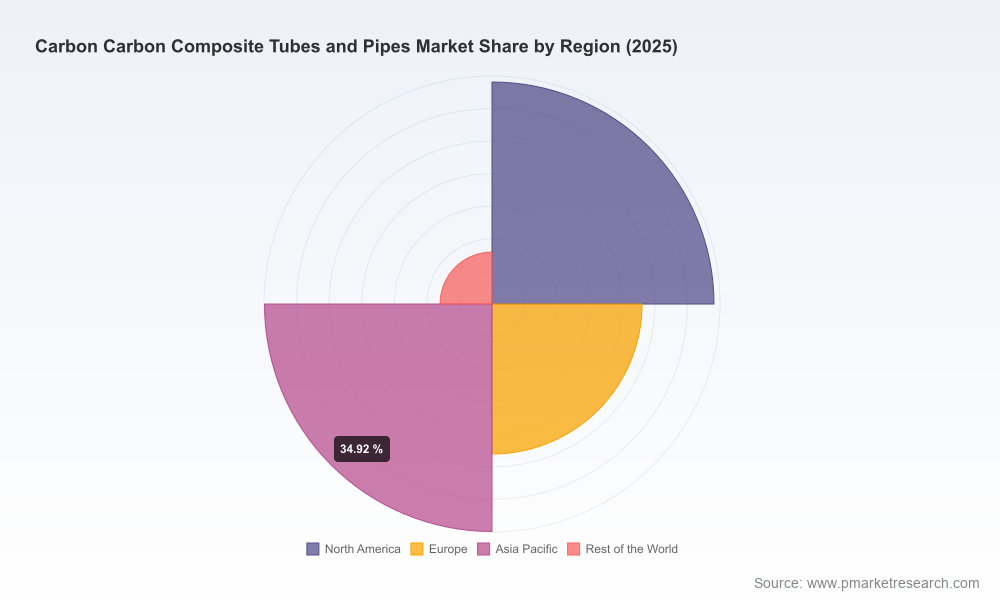
The market’s structure is moderately concentrated, with a small group of established manufacturers and material suppliers accounting for a meaningful share of revenue. This concentration reflects the technical barriers associated with high-temperature densification, fiber architecture control, and quality consistency at scale. At the same time, the distribution of activity across regions is varied, with Asia Pacific and North America together representing the largest revenue pools, followed by Europe and a smaller but strategically important Rest of World footprint. Process-wise, Chemical Vapor Infiltration remains the dominant manufacturing route, reflecting its suitability for achieving uniform densification and tight dimensional tolerances in demanding applications, while Liquid Phase Impregnation continues to serve a substantial portion of volume-oriented and cost-sensitive requirements. On the demand side, semiconductor and solar silicon production represents the largest application segment, followed by aerospace and defense systems, high-temperature industrial furnaces, and medical and laboratory equipment.
Several challenges and inflection points define the current moment.
- Process scalability and cost-performance trade-offs remain a persistent tension. High-performance carbon-carbon components require precise control of fiber preforms and multi-step densification, which can limit throughput and elevate unit costs. As demand increases, the industry must balance the adoption of faster or more capital-efficient processes with the need to preserve thermal and mechanical performance in critical applications.
- Raw material dependency and precursor dynamics are reshaping cost structures. The carbon fiber input base is heavily anchored in PAN-derived precursors for the majority of production, while pitch-based precursors are gaining attention for their high-modulus and thermal characteristics in specialty carbon-carbon uses. Shifts in precursor availability, pricing, and regional production capacity can cascade into tube and pipe manufacturing economics, particularly for suppliers that rely on imported tow or prepreg formats.
- Policy and trade measures are introducing new cost and compliance considerations. Environmental mechanisms targeting embedded emissions and recent tariff actions on carbon fiber materials are altering sourcing strategies and production footprints. These measures do not uniformly affect all players; instead, they create differentiation based on manufacturing location, input sourcing, and the ability to document and manage emissions intensity.
For decision-makers, these challenges translate into a simple imperative: growth alone does not guarantee margin expansion or supply security. The winners will be those who can align process capability with application requirements, manage precursor exposure, and adapt to an increasingly rules-based trade and environmental environment.
Carbon-Carbon Composite Material Market
Key Drivers Reshaping the Market
The forward momentum of the carbon-carbon composite tubes and pipes market is being shaped by a combination of technological, regulatory, demand-side, and supply chain forces. Each driver reinforces the others, creating a multi-dimensional shift rather than a single linear trend.
Technology innovation and process intensification
Advances in densification and preform engineering are expanding the performance envelope of carbon-carbon tubes and pipes while gradually improving manufacturability. The launch of a dedicated startup focused on ultra high-density carbon/carbon composites, leveraging field-assisted sintering and spark plasma sintering-based densification, illustrates how new process approaches are being commercialized for aviation, space, industrial, semiconductor, and automotive applications. These techniques aim to reduce cycle times and improve density uniformity, which can lower unit costs and unlock applications that were previously uneconomical. Beyond startup activity, incumbent manufacturers continue to refine chemical vapor infiltration and liquid phase impregnation workflows, optimizing temperature profiles, catalyst systems, and fiber architecture to improve yield and repeatability. The practical implication for buyers and investors is that process maturity is becoming a source of differentiation: suppliers that can deliver consistent quality at reduced cycle times will be better positioned to capture volume growth without sacrificing performance credentials.
Policy and regulatory environment
Regulatory developments are increasingly influencing where and how carbon-carbon products are made, sourced, and deployed. The European Union’s Carbon Border Adjustment Mechanism is scheduled to impose fees on selected imports based on greenhouse gas emissions beginning in 2026, creating a direct cost link between carbon intensity and market access. For carbon-carbon tubes and pipes, this mechanism can affect competitive dynamics if production in certain regions carries higher embedded emissions or if suppliers lack robust data to substantiate lower-intensity claims. At the same time, trade policy in the United States has tightened, with tariffs on carbon fiber materials from targeted countries increasing to 25 percent for raw carbon fiber tow and 17.5 percent for prepreg materials under a Section 301 expansion effective in early 2025. These measures raise input costs for downstream producers that depend on imported reinforcements and may incentivize regional sourcing, inventory buffering, or substitution toward locally available precursors. The strategic takeaway is that regulatory risk is no longer a peripheral concern; it is now a material variable in total cost of ownership, supply continuity, and market entry decisions.
Demand-side shifts across high-value applications
Demand is being pulled by multiple high-intensity application areas that require materials capable of withstanding extreme thermal and mechanical environments. In semiconductor and solar silicon production, the need for components that maintain dimensional stability and resist contamination at elevated temperatures continues to support adoption of carbon-carbon tubes and pipes in furnace and processing equipment. Aerospace and defense systems contribute a second major demand pillar, where weight efficiency, thermal resistance, and durability under cyclic loading are critical. High-temperature industrial furnaces represent a third demand center, particularly in industries that require long component life and reduced downtime. A smaller but steady demand stream comes from medical and laboratory equipment, where precision and corrosion resistance matter. The common thread across these segments is not volume alone but performance sensitivity: end users are willing to pay for reliability and lifecycle value when failure or degradation carries high operational or safety costs. This dynamic favors suppliers that can evidence performance consistency and provide application-tailored geometries and surface treatments.
Supply chain and cost structure evolution
The cost structure of carbon-carbon tubes and pipes is influenced by the broader carbon fiber ecosystem, where PAN-based precursors still account for the vast majority of production used in carbon-carbon composites. Global demand for carbon fiber reinforced polymer applications is projected to reach 285 kilotonnes in 2025, with non-aerospace sectors contributing an increasing share of growth. This broader demand environment can affect fiber availability and pricing, with knock-on effects for carbon-carbon manufacturers that compete for the same reinforcement inputs. At the same time, pitch-based carbon fiber precursors are expected to grow significantly in targeted high-performance segments, reflecting their value in specialty carbon-carbon applications that demand high modulus and thermal properties. The supply chain implication is twofold: first, manufacturers should actively manage precursor exposure by diversifying sources, locking in supply agreements, or aligning production with regional fiber capacity; second, the emergence of pitch-based options creates an opportunity for performance-led differentiation, especially where thermal conductivity, stiffness, or oxidative resistance are decisive.
Competitive Landscape and Leading Strategies
The competitive field for carbon-carbon composite tubes and pipes spans manufacturers that produce finished components and material suppliers that provide the underlying carbon fiber reinforcements and prepregs. This duality matters because value capture is distributed across the chain: producers with strong process capabilities can differentiate on quality and application fit, while material suppliers with scale, precursor expertise, and certification support can anchor demand and influence downstream economics. The landscape includes a mix of Chinese manufacturers with deep experience in high-temperature carbon materials, Japanese and German firms with strong carbon fiber and composite heritage, and European specialists focused on precision tubing and lightweight profiles.
Several strategic patterns emerge among the leading participants.
- Vertical and horizontal integration is a recurring theme. Some manufacturers integrate forward into finished tubes and pipes, while others maintain a strong position in carbon fiber raw materials and prepregs that feed composite production. Integration can reduce coordination risk, improve lead-time control, and enable tighter quality oversight, but it also requires capital discipline and the ability to manage multiple technology roadmaps.
- Application-focused specialization is driving differentiation. Companies with long experience in high-temperature carbon materials are leveraging process know-how to serve thermal and structural applications, while precision tube specialists are emphasizing rigidity, dimensional accuracy, and lightweight performance. This specialization allows firms to build reputation and repeat business in niches where specifications are demanding and switching costs are high.
- Geography and regulatory positioning are becoming strategic levers. With tariff actions affecting imported carbon fiber materials and emissions-based mechanisms approaching, companies with manufacturing footprints, sourcing strategies, or compliance capabilities aligned to target markets may gain a competitive edge. Location decisions and input strategies are increasingly tied to total cost, not just unit price.
Market structure is evolving along multiple paths. Consolidation remains plausible in segments where scale, process maturity, and certification infrastructure confer advantages, particularly as buyers seek reduced supply risk and consistent quality. At the same time, fragmentation is likely to persist in specialized niches where custom geometries, surface treatments, and application-specific testing create high barriers to commoditization. New entry is also possible, especially where novel densification methods or advanced precursors open access to previously underserved applications. The recent launch of a startup targeting ultra high-density carbon/carbon composites using field-assisted sintering and spark plasma sintering illustrates how innovation can create new entrants with differentiated process claims. The broader trend is toward a layered competitive environment: a concentrated core of established players, a set of material suppliers shaping input economics, and a stream of specialized and emerging firms targeting high-value corners of the market.
Forward Trends and Commercial Implications
Looking ahead three to five years, several trends are likely to shape the market’s evolution and create distinct commercial opportunities.
Trend one: Process-enabled cost reduction without performance compromise
As field-assisted densification, optimized vapor infiltration, and improved preform architectures mature, the industry is likely to see incremental reductions in cycle time and variability. For buyers, this trend can translate into more competitive pricing for high-performance components and broader applicability in volume-adjacent segments. For producers, the opportunity lies in scaling process improvements while maintaining the tight tolerances and thermal stability that critical applications require. Commercial success will depend on demonstrating that faster or more capital-efficient processes do not erode the performance credentials that justify the use of carbon-carbon in the first place.
Trend two: Regulatory-driven sourcing and footprint realignment
As emissions-linked mechanisms and tariff measures come into force, buyers and producers will increasingly evaluate total landed cost, compliance documentation, and manufacturing location as strategic variables. This may accelerate regional sourcing, dual-sourcing, or nearshoring in certain markets, and it may also encourage investments in data collection and lifecycle documentation to support market access. For suppliers, proactive alignment with regulatory expectations can become a competitive advantage, particularly in regions where carbon intensity or trade exposure creates cost differentials. For investors, the trend signals that companies with flexible sourcing, transparent emissions data, and adaptable production footprints are better positioned to navigate policy-driven cost shifts.
PW Consulting
Trend three: Performance-led substitution and new application capture
Pitch-based precursors and advanced carbon fiber architectures are expected to gain traction in targeted high-performance segments, supporting applications where stiffness, thermal properties, or oxidative resistance are decisive. This creates opportunities for suppliers to differentiate through material selection, not just geometry or process speed. At the same time, as semiconductor capacity expansion, aerospace system modernization, and high-temperature industrial processing continue, there is room for new application capture where component reliability and lifecycle value justify carbon-carbon adoption. The key commercial risk is application specificity: what works in one furnace or flight system may not transfer directly to another, so qualification, testing, and customer co-development remain essential.
Potential uncertainties should be monitored. Input cost volatility, especially in carbon fiber precursors and prepreg formats, can pressure margins if not managed through sourcing strategy or pricing discipline. Regulatory timing and scope may shift, altering the pace and geography of cost impacts. In addition, alternative materials and process innovations in adjacent categories could narrow the performance-cost gap in some applications, particularly where extreme thermal requirements are less stringent. These uncertainties do not undermine the growth outlook, but they do argue for disciplined investment and continuous intelligence gathering.
Strategic Recommendations for Decision-Makers
The market trajectory points to expanding demand and rising importance of process, sourcing, and compliance capabilities. The following recommendations are directed at different audiences but share a common theme: actionable advantage will come from aligning capabilities with where value is created in the chain.
For manufacturers and suppliers
- Invest in process reliability and qualification infrastructure. In high-temperature and high-precision applications, consistent quality and documented performance often matter more than marginal cost advantages. Building repeatability, reducing scrap, and strengthening application-specific testing can protect margins and support premium positioning.
- Manage precursor exposure proactively. Diversify sourcing where feasible, evaluate regional supply options in light of tariffs and CBAM implications, and assess where pitch-based precursors can support performance differentiation without over-indexing on cost volatility.
- Develop application-tailored offerings. Custom geometries, surface treatments, and thermal management features can increase switching costs and improve customer stickiness, especially in semiconductor, aerospace, and industrial furnace markets.
For investors
- Focus on process differentiation and supply chain resilience rather than size alone. Companies with proprietary densification know-how, robust quality systems, and flexible sourcing are better positioned to convert market growth into durable returns.
- Watch for consolidation and niche expansion signals. Integration opportunities may arise where scale and certification create advantages, while specialized players with strong application ties may offer attractive exposure to high-value segments.
- Factor regulatory and trade dynamics into valuation assumptions. Tariff exposure, emissions documentation capability, and manufacturing location can materially affect cost structures and market access over the forecast period.
For procurement and engineering leaders
- Evaluate total cost of ownership, not just unit price. Consider cycle life, maintenance intervals, replacement frequency, and compliance-related costs when comparing carbon-carbon components with alternatives.
- Qualify suppliers on process maturity and data transparency. Documentation of densification methods, quality control, and emissions-related information can reduce downstream risk, especially as regulatory mechanisms mature.
- Engage early in application development. Where possible, collaborate on geometry, material selection, and testing to ensure that tube and pipe specifications align with operating conditions and lifecycle goals.
Closing Perspective
The carbon-carbon composite tubes and pipes market is moving from a niche performance segment toward a more broadly relevant materials category, supported by sustained demand in semiconductor, aerospace, industrial, and laboratory applications. Growth will be shaped less by a single driver than by the interplay of process innovation, regulatory change, precursor dynamics, and application-specific performance requirements. For companies and investors, the strategic question is not whether the market will expand, but how to position within it: which processes to scale, which inputs to secure, which applications to target, and how to build resilience against policy and cost shifts.
Worldwide Carbon Nano Cold Cathode Tube Market
Detailed segmentation data, regional revenue splits, company-level profiles, and scenario-based forecasts can sharpen these decisions significantly. The full research report provides a deeper view of market size by region and application, process-type splits, competitive profiles, and forward projections that support capital planning, sourcing strategy, and market entry analysis. For decision-makers seeking to act with precision, comprehensive data and customized analysis are the next logical step.
For detailed analysis of this topic, please visit the official page: Worldwide Carbon Carbon Composite Tubes and Pipes Market
Lacy Lee
Senior Marketing Manager
sales@pmarketresearch.com
00852-95632430
PW Consulting: www.pmarketresearch.com
More Posts


Report This Post
Please complete the following requested information to flag this post and report abuse, or offensive content. Your report will be reviewed within 24 hours. We will take appropriate action as described in Findit terms of use.
