


Right Now

The Global Smart Antimicrobial Surface Market: Strategic Dynamics, Competitive Shifts, and Commercial Pathways Through 2032
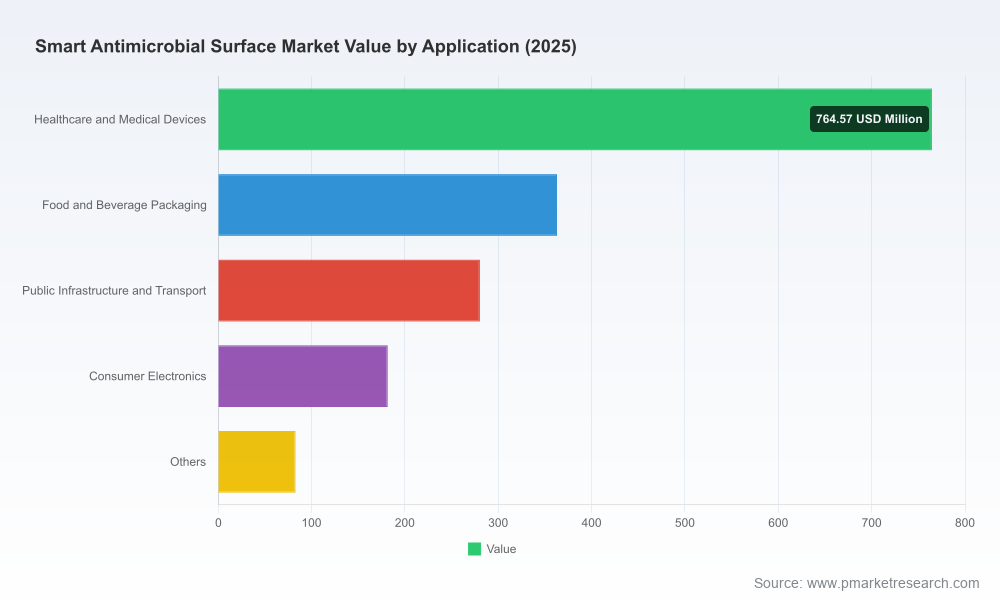
The worldwide market for smart antimicrobial surfaces has evolved from a niche infection-control supplement into a strategically significant segment within the broader advanced materials and medical device ecosystems. Valued at approximately 1,672.4 million USD in 2025, the market has consistently expanded from 980.5 million USD in 2020, reflecting a compound annual growth rate of 12.0 percent across the 2026–2032 forecast horizon. By 2032, projected revenue is expected to reach 3,697.1 million USD. This trajectory is not merely a function of post-pandemic hygiene awareness; it represents a structural re-evaluation of how surfaces interact with biological environments across healthcare, packaging, infrastructure, and consumer goods. For executives and investors, the growth curve signals more than incremental demand. It points to a convergence of material science, regulatory evolution, and operational risk management that is reshaping procurement priorities, product architectures, and competitive positioning.
Despite the headline momentum, the sector faces structural inflection points that will separate commoditized coatings from durable competitive advantages. The first challenge lies in balancing efficacy with biocompatibility and regulatory compliance. As surface technologies move from temporary disinfectant applications toward permanent or semi-permanent integrations on medical devices, implants, and high-touch public infrastructure, developers must navigate stringent biocompatibility standards and, in certain jurisdictions, biocidal product registration pathways. The second challenge is economic: antimicrobial surface integration increases unit costs and introduces supply chain complexity, particularly for noble metal formulations and specialized polymer architectures. Without clear reimbursement mechanisms or demonstrable total-cost-of-ownership benefits, adoption in cost-sensitive segments will remain selective. The third challenge is technological differentiation in a crowded space. Multiple platforms now claim broad-spectrum activity, yet performance claims, longevity, leaching behavior, and mechanical durability vary widely. Buyers are increasingly sophisticated, demanding validation beyond laboratory efficacy to include real-world wear resistance, cleaning compatibility, and clinical or operational outcomes. These pressures are not deterrents; they are filters that will concentrate value among players who can combine proven performance, regulatory clarity, and integration-ready form factors.
Key Drivers Shaping Market Trajectory
Technological Innovation and Material Architecture
The most consequential driver is the shift from passive, release-based antimicrobials toward surface-active, contact-kill, and non-leaching architectures. Traditional silver-based and copper-based systems have delivered reliable broad-spectrum performance, and silver formulations continue to play a prominent role in healthcare surface coatings due to their established efficacy profiles and controlled integration approaches. However, the market is increasingly rewarding technologies that minimize substance release while maintaining or improving pathogen reduction. Non-leaching, zero-release, contact-kill surfaces are gaining traction for long-term implants and devices where permanent activity and biocompatibility are critical. Mechanical disruption mechanisms, such as quaternary ammonium compound-based nanosurfaces that physically rupture pathogens on metallic and polymeric substrates, illustrate how chemical and physical design are converging. At the same time, hydrophilic and thromboresistant coating platforms are incorporating antimicrobial integration options, allowing device manufacturers to address infection risk alongside blood compatibility and biofilm mitigation within a single coating strategy. This architectural convergence reduces the need for multiple processing steps and opens the door to multi-functionality, which is becoming a key purchasing criterion for device OEMs and facility managers.
Policy, Regulation, and Compliance Pathways
Regulatory and standards environments are acting as both gatekeepers and accelerators. Medical device coatings that incorporate antimicrobial properties must meet biocompatibility expectations, and public health claims can trigger additional registration requirements depending on the jurisdiction and the nature of the claim. In the United States, the FDA has provided a structured pathway for certain non-eluting antimicrobial surface technologies on rigid metallic implant devices, granting De Novo classification to establish new product codes for covalently bonded antimicrobial coatings intended to reduce pre-implantation microbial contamination. This clearance signals a maturing regulatory appreciation for surface-level, non-drug interventions that mitigate contamination risk without acting as systemic therapeutics. In parallel, international frameworks continue to require careful navigation for biocidal claims, particularly where surface activity is marketed with public health language. For manufacturers, the practical implication is that regulatory strategy can no longer be an afterthought. Early alignment with biocompatibility testing, material characterization, and claim substantiation is becoming a competitive moat, especially for companies pursuing implantable or high-risk applications.
Demand-Side Shifts and Operational Risk Economics
On the demand side, hospitals, device manufacturers, packaging producers, and public infrastructure operators are recalibrating how they allocate hygiene and infection-control budgets. The pandemic era proved that surface contamination is a visible and manageable vector, but the lasting shift is economic rather than emotional. Healthcare systems are under pressure to reduce healthcare-associated infections, shorten recovery times, and minimize device-related complications that carry both clinical and financial penalties. In this context, antimicrobial surfaces are being evaluated not as standalone solutions but as components of integrated risk-reduction strategies. For medical device buyers, coatings that lower bacterial adhesion and biofilm formation can complement sterilization protocols and post-market surveillance goals. In food and beverage packaging and consumer-facing infrastructure, the appeal lies in extending functional integrity, reducing contamination risk at high-touch points, and reinforcing brand trust through visible or demonstrable hygiene engineering. Importantly, demand is becoming more evidence-driven. Purchasers are asking for durability under repeated cleaning, compatibility with existing maintenance workflows, and performance data that maps to their specific use cases rather than generic laboratory benchmarks.
Anti-Microbial Coatings Market
Supply Chain, Cost Structure, and Manufacturing Realities
The third driver concerns how antimicrobial surfaces are manufactured, scaled, and integrated into end products. Specialty coating processes, conformal deposition, and UV-cure or automated coating equipment are increasingly central to commercialization. As demand grows, companies are investing in manufacturing and global supply capabilities that pair coating chemistry with processing technology. This matters because the value of an antimicrobial surface is not only in the active mechanism but in the ability to apply it consistently, at scale, and in ways that fit downstream manufacturing or maintenance operations. Cost structures will continue to be influenced by precious metal exposure in some formulations, regulatory testing burdens, and the need for validated production controls. Yet the same dynamics are creating opportunities for players who can standardize application, reduce cycle times, and offer integration-ready solutions that minimize retrofit costs for device or infrastructure manufacturers. In short, the supply side is moving from bespoke coating services toward platform-based, repeatable processes, and that shift is reshaping margin profiles and partnership models across the value chain.
Competitive Landscape and Strategic Positioning
The competitive field is defined by a mix of specialty coating developers, medical device material providers, and surface-technology innovators, with a notable concentration among established players. Market leadership is clustered, reflecting the technical, regulatory, and scale requirements that raise barriers to entry in higher-value applications. Several companies illustrate divergent strategic pathways that are worth studying. HeiQ Materials AG has built a presence around ready-to-use silver-based antimicrobial coatings designed for high-touch surfaces in healthcare environments, emphasizing broad-spectrum efficacy, transparency, and abrasion resistance. Its positioning highlights the continued relevance of proven chemistries in facility-facing applications where ease of application and visible performance matter. Covalon Technologies Ltd. and Hydromer, Inc. operate more deeply within medical device coating ecosystems, offering custom and platform-based solutions that integrate antimicrobial properties with adhesion, thromboresistance, and device-specific performance needs. Their strategies reflect a device-OEM-centric model: tailor the coating to the clinical or mechanical context, and embed infection control into the product architecture rather than treating it as an add-on.
A second strategic archetype emphasizes non-leaching, contact-kill permanence. BioInteractions Ltd. has introduced surface-active systems positioned as zero-leaching, permanent contact-kill technologies for medical devices and implants, extending the coating’s functional life and reducing concerns about substance release over time. Orthobond Corporation has taken a related but mechanistically distinct path, using covalently bound antimicrobial nanosurface technology that mechanically disrupts pathogens on metallic and polymeric implant surfaces, with FDA De Novo clearance supporting initial commercial use in spinal fusion devices. This regulatory milestone is strategically important because it demonstrates that non-eluting surface technologies can reach commercial deployment in implantable applications when backed by robust evidence and clear claim boundaries. Specialty Coating Systems (SCS) showcases the value of conformal coating technology with strong log-reduction performance and biocompatibility suitability across implantable and non-implantable devices, reinforcing the role of process compatibility in adoption. Parx Materials N.V. illustrates yet another angle: biocide-free passive action polymer technology that relies on zinc-based compounds to prevent bacterial adhesion and biofilm without releasing substances, targeting both medical devices and textiles. Its approach appeals to manufacturers seeking antimicrobial properties with minimal regulatory friction and broader material versatility.
PW Consulting
Across these profiles, differentiation is increasingly tied to three axes: mechanism and leaching behavior, application form factor and process compatibility, and regulatory and claims posture. The market is not consolidating in a simplistic wave of mergers; rather, it is stratifying. Higher-value medical device and implant applications reward platform technologies with strong biocompatibility data, repeatable manufacturing, and clear regulatory positioning. Facility and infrastructure applications favor ease of deployment, durability under cleaning, and cost-effective scale. Meanwhile, new entrants are likely to emerge where they can combine material innovation with a credible go-to-market pathway, such as partnering with device manufacturers, embedding coatings into existing product lines, or targeting high-touch consumer and public infrastructure segments with demonstrable durability. The strategic implication is that competitive advantage will depend less on claiming broad efficacy in isolation and more on delivering validated performance within a specific use environment, with a compliant and defensible claims framework.
Future Trends and Commercial Opportunities (2026–2032)
The next three to five years will likely be shaped by three interrelated trends. First, non-leaching and surface-active mechanisms will continue to gain share, particularly in implantable and long-duration device applications where permanence, biocompatibility, and release minimization are decisive. As clinical and procurement stakeholders become more familiar with contact-kill and adhesion-prevention concepts, the market will reward technologies that can demonstrate durable performance without dependence on ongoing release. The commercial opportunity here lies in pairing coating design with device engineering early in the development cycle, so that antimicrobial function is optimized as part of the product rather than retrofitted.
Second, regulatory and claims sophistication will become a differentiator. As more surface technologies approach the boundary between material feature and public health intervention, companies that invest early in biocompatibility validation, standardized testing, and carefully scoped claims will gain faster pathways to adoption and lower downstream risk. Where jurisdictions require biocidal registration for certain claims, proactive compliance planning will separate scalable players from those constrained by late-stage remediation. The opportunity is to treat regulatory strategy as a product feature: clear, defensible, and aligned with the intended use case.
Silver-based Antimicrobial Agent Market
Third, integration and process compatibility will increasingly determine commercial velocity. Automated coating, UV cure, conformal deposition, and platform-based manufacturing will reduce friction for device OEMs and infrastructure operators who need repeatable results at scale. Suppliers that can offer not only the active surface but also the application technology, process parameters, and validation support will be positioned to capture more of the value chain. For investors and corporate developers, this points to due diligence criteria that extend beyond chemistry to include manufacturing readiness, quality systems, integration support, and evidence packages that match buyer expectations. At the same time, risks remain. Reimbursement frameworks have not created device-specific codes exclusively tied to antimicrobial surface coatings on medical devices or hospital surfaces, which means adoption will continue to rely on demonstrated value in infection reduction, complication avoidance, and total cost of ownership rather than direct coding benefits. Raw material exposure, testing costs, and the need to maintain performance under real-world cleaning and wear conditions will also temper growth in price-sensitive segments. These risks are manageable, but they require disciplined positioning and realistic value propositions.
Actionable Recommendations for Decision-Makers
For medical device manufacturers and surface-integrated product developers, the priority is to embed antimicrobial surface strategy into the product development timeline rather than treating it as a late-stage feature. Select mechanisms that align with the intended use environment, prioritize biocompatibility and process compatibility from the outset, and build evidence packages that extend beyond generic efficacy to include durability, cleaning compatibility, and application-specific performance. Where implantable or high-risk applications are involved, pursue regulatory clarity early and scope claims carefully to match the supporting data. The most resilient path is to partner with coating providers who can offer repeatable application technology, validation support, and a defensible compliance posture, enabling faster integration and lower downstream uncertainty.
For investors and corporate developers, the opportunity lies in distinguishing platform technologies from point solutions. Favor businesses that combine material innovation with manufacturing readiness, clear regulatory positioning, and demonstrated integration support. Evaluate the evidence base for real-world durability and biocompatibility, assess the company’s claims framework, and examine whether the commercial model depends on bespoke services or scalable application processes. In a 12.0 percent CAGR environment, value creation will increasingly accrue to those who can scale validated solutions into high-priority applications while maintaining compliance and performance consistency. Diversification across healthcare, packaging, and public infrastructure can provide resilience, but only when each segment is served with a credible use-case narrative and appropriate technical and regulatory alignment.
For procurement leaders in healthcare facilities, packaging, and public infrastructure, the emphasis should shift from generic “antimicrobial” labels to validated performance and lifecycle economics. Request data that maps to the specific high-touch points, cleaning regimens, and wear conditions in your environment. Evaluate total cost of ownership, including application labor, reapplication frequency, cleaning chemical compatibility, and expected service life. Where possible, pilot surfaces in controlled, measurable contexts and track outcomes that matter operationally, such as contamination risk reduction, maintenance simplicity, and durability under routine use. Procurement decisions will be strongest when they combine technical validation with operational fit, rather than relying solely on marketing claims or laboratory benchmarks.
The smart antimicrobial surface market is entering a phase where growth will be earned through evidence, integration, and regulatory discipline rather than claimed through broad efficacy statements alone. For leaders navigating this landscape, the most valuable intelligence is segment-specific: which mechanisms suit which applications, how regulatory pathways are unfolding for non-leaching and contact-kill technologies, where manufacturing and integration advantages are concentrating, and how reimbursement and cost structures will shape adoption in each vertical. A comprehensive research report can provide the detailed segmentation data, company-level profiles, and scenario-based forecasts needed to convert these strategic directions into concrete plans.
For detailed analysis of this topic, please visit the official page: Worldwide Smart Antimicrobial Surface Market
Lacy Lee
Senior Marketing Manager
sales@pmarketresearch.com
00852-95632430
PW Consulting: www.pmarketresearch.com
More Posts


Report This Post
Please complete the following requested information to flag this post and report abuse, or offensive content. Your report will be reviewed within 24 hours. We will take appropriate action as described in Findit terms of use.
