


Right Now

Used Cooking Oil for Sustainable Aviation Fuel: Navigating the Strategic Inflection Point
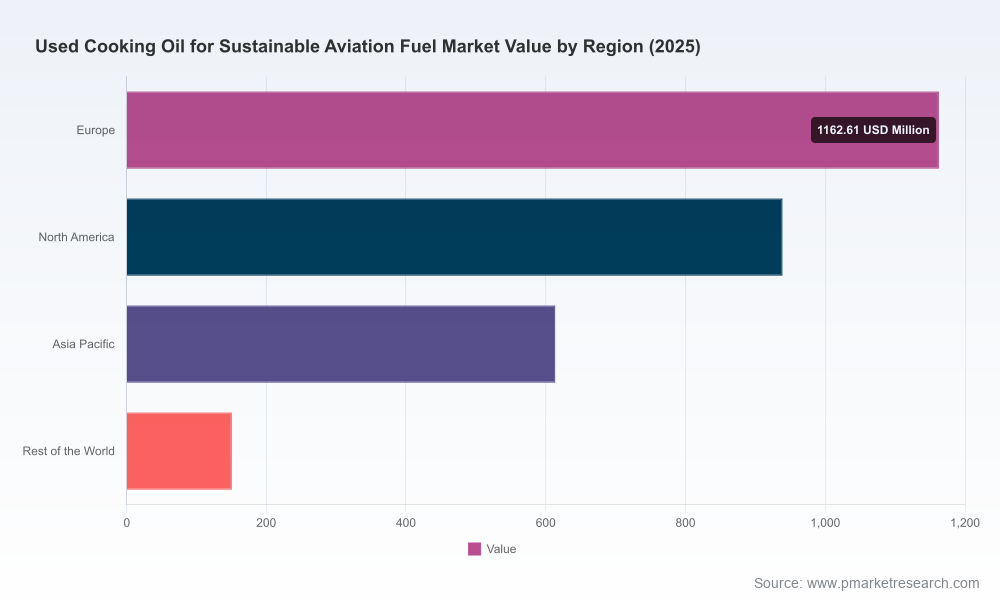
The aviation sector stands at a critical juncture where decarbonization mandates and operational realities intersect. Used cooking oil has emerged as a foundational feedstock for sustainable aviation fuel, bridging the gap between immediate emissions reduction requirements and the scalable production pathways available today. The market for UCO destined for SAF has expanded from approximately 840 million USD in 2020 to an estimated 2,865 million USD in 2025, reflecting a compound annual growth rate of 20.31 percent through the forecast period extending to 2032. This trajectory underscores a transition from niche experimentation to industrialized feedstock procurement, driven by regulatory timelines and airline decarbonization commitments. Yet the scale of growth obscures structural complexities that will determine which participants capture durable value and which face margin compression or supply constraints.
Market Landscape and Structural Challenges
The UCO-to-SAF market has matured rapidly, but its expansion is uneven across supply chains, regulatory jurisdictions, and conversion technologies. The underlying market structure reveals a concentrated yet fragmented ecosystem where feedstock availability, compliance documentation, and conversion economics interact to shape competitive outcomes. Three interconnected challenges define the current inflection point.
Feedstock Availability and Price Volatility
The fundamental tension in the UCO-SAF market lies in matching growing demand with physically constrained and geographically dispersed waste streams. UCO collection volumes are inherently limited by consumer behavior, food service density, and logistical efficiency. As SAF production scales, competition for available UCO intensifies not only among aviation fuel producers but also against renewable diesel and other bio-based applications. Price signals in 2025 and 2026 have reflected this pressure, with bulk UCO values fluctuating within a broad range and spiking in tight market conditions. Such volatility complicates long-term offtake planning, undermines production economics, and forces operators to make capital decisions under uncertain input cost assumptions.
Traceability and Sustainability Credentialing
UCO-SAF value propositions depend heavily on demonstrable sustainability benefits, which in turn require robust chain-of-custody documentation and avoidance of fraud. The integrity of UCO sourcing has become a regulatory and reputational priority, particularly as regions implement blending mandates and sustainability criteria. Verification costs, audit burdens, and the risk of disqualified volumes create compliance overhead that smaller collectors and processors may struggle to absorb. At the same time, airlines and fuel purchasers increasingly demand transparent provenance to support corporate sustainability reporting. This dynamic elevates the strategic importance of integrated collection-to-conversion networks and digital traceability solutions.
Geographic Sourcing Shifts and Trade Policy Exposure
The global UCO trade has been shaped by supply imbalances, with certain regions historically importing significant volumes from distant sources. Recent trade policy changes have disrupted established sourcing patterns, prompting buyers to diversify across alternative origins. This rebalancing is not merely a procurement exercise; it affects logistics costs, lead times, quality consistency, and the geographic distribution of processing capacity. Companies dependent on single-source or single-route supply chains face heightened exposure, while those with multi-region aggregation capabilities and flexible contracting structures are better positioned to absorb shocks and maintain continuity.
Key Drivers Shaping the Market Trajectory
The expansion of UCO for SAF is propelled by a convergence of technological, regulatory, demand-side, and supply chain forces. Understanding how these drivers interact provides a clearer view of where durable competitive advantages will form.
Policy and Regulatory Mandates as Demand Anchors
Regulatory blending requirements are the most direct catalyst for UCO-SAF demand. The EU ReFuelEU Aviation mandate, effective from January 2025, obligates a minimum SAF blend that rises progressively toward 2030, with UCO-based HEFA pathways expected to dominate compliance in the near term due to their commercial readiness. The UK SAF Mandate similarly established a blending target, with early compliance data indicating that the majority of volumes delivered in the initial months were derived from UCO feedstocks. In the United States, the Section 45Z clean fuel production credit provides a financial incentive of up to one dollar per gallon for qualifying SAF through 2029, though eligibility is restricted to North American feedstocks. These regulatory architectures create localized demand patterns and shape the economics of where feedstock should be sourced and processed.
PW Consulting Chemical & Energy Research Center
For market participants, the implication is clear: mandate timing and feedstock eligibility rules matter as much as total volume targets. Compliance-driven demand can accelerate near-term procurement, but it also introduces jurisdictional differences in credit value, feedstock qualification, and documentation requirements. Companies that map regulatory calendars to their feedstock and production strategies will gain a timing advantage over those that treat mandates as uniform global drivers.
Technological Pathways and Conversion Efficiency
The HEFA pathway remains the most commercially established route for converting UCO into SAF, benefiting from existing refinery configurations and proven catalyst systems. Alongside standalone HEFA plants, co-processing within conventional petroleum refineries offers an alternative model, allowing incremental SAF production without entirely new infrastructure. The choice between these pathways affects capital intensity, operating flexibility, and feedstock purity requirements. HEFA facilities generally require more refined and consistent feedstocks, while co-processing can tolerate broader feedstock profiles but may be constrained by refinery turnaround schedules and blend limits.
Recent production ramp-ups using waste-based feedstocks illustrate the operational reality of scaling these pathways. Some facilities have moved from commissioning to production increases, while others have navigated technical and supply adjustments during early operations. The broader lesson is that technology readiness alone does not guarantee smooth commercialization; feedstock logistics, quality control, and integration with existing operations determine whether a plant achieves planned throughput and cost performance.
Corporate Decarbonization and Airline Procurement Behavior
Airlines and corporate travel programs are embedding SAF into their decarbonization roadmaps, often ahead of mandatory thresholds. Voluntary demand is being shaped by customer expectations, investor pressure, and the desire to secure future supply in a tight market. This demand-side shift is not uniform; some carriers prioritize direct supply agreements to guarantee volumes, while others participate in aggregated procurement pools to manage cost exposure. The result is a growing set of long-term offtake relationships that can stabilize production planning but also raise the bar for suppliers to offer credible volume commitments and sustainability documentation.
Biobased Transformer Oil Market
The interaction between voluntary and mandated demand creates a layered market. Mandates establish the floor, while voluntary commitments can lift baseline demand and improve project finance viability. Companies that understand this layering can better strategize on whether to target compliance-driven buyers, premium voluntary buyers, or a combination of both.
Supply Chain Reconfiguration and Cost Structure Pressures
The economics of UCO-SAF are sensitive to collection efficiency, transportation distances, pre-processing costs, and conversion yields. As demand rises, the marginal cost of acquiring additional UCO increases because the easiest and most concentrated sources are collected first. This dynamic encourages investment in localized collection networks, improved pre-processing, and regional aggregation hubs. It also favors operators who can integrate collection, refining, and fuel distribution to capture value across multiple steps rather than relying on spot-market feedstock purchases.
Cost structures are further influenced by the trade policy environment and the geographic mix of sourcing. Shifts away from previously dominant import origins require recalibration of logistics, supplier qualification, and quality assurance. These adjustments can temporarily elevate costs but may also improve long-term resilience if they lead to diversified and closer sourcing geographies. The firms that treat supply chain design as a strategic variable rather than a support function will be better equipped to manage cost volatility and preserve margins.
Competitive Landscape and Leading Strategies
The competitive field in the UCO-SAF market spans collectors, aggregators, processors, and integrated fuel producers. Rather than a single business model, the landscape is defined by varying degrees of vertical integration, geographic focus, and technology alignment. Analyzing how leading participants position themselves reveals the strategic choices that are likely to shape market consolidation and entry dynamics over the next several years.
Strategic Positioning of Core Participants
A global leader in renewable fuels has built a broad international footprint combining extensive UCO collection networks with multiple HEFA-based SAF production sites. Its strategy emphasizes vertical integration from feedstock aggregation to finished fuel, supported by acquisitions that expand domestic collection capacity in key markets. This integration reduces exposure to spot feedstock volatility and strengthens control over sustainability credentials, enabling the company to serve both compliance and voluntary demand with relatively stable supply assurances.
Another major participant combines waste feedstock supply with joint venture production capabilities, delivering neat SAF derived from UCO and other renewable inputs. Its approach illustrates the value of pairing feedstock origination with conversion capacity, allowing coordinated volume planning and risk sharing. Early deliveries of neat SAF to aviation fuel distributors demonstrate how such integrated models can move from design to commercial supply, establishing credibility with downstream buyers.
Several specialized collectors and processors have carved out strong regional positions, particularly in Europe and North America. Some focus intensely on UCO collection and pre-processing to supply conversion partners, while others aggregate large volumes under long-term agreements to support biorefineries. These firms often compete on logistical reach, supplier relationships, quality consistency, and traceability. Their strategic advantage rests on deep local knowledge and established collection infrastructure, which can be difficult for new entrants to replicate quickly.
In Asia, state-linked and large industrial players are advancing domestic UCO-based SAF capabilities. One state-owned operator completed its first shipment of aviation fuel produced from used cooking oil, signaling a step toward localized production and supply chain development. Another major refiner has invested in proprietary bio-aviation fuel technologies and operates plants designed to process UCO into jet fuel. These initiatives reflect a broader push to develop domestic feedstock-to-fuel value chains, reduce import dependence, and align fuel production with national sustainability objectives.
In Japan, a partnership involving refinery operations, technology providers, and municipal stakeholders aims to promote domestic UCO collection for large-scale local SAF production. This type of collaboration highlights how regional market development often requires alignment among fuel producers, local governments, and waste management entities to build collection volume and processing capacity in tandem.
Differentiation Through Integration, Reliability, and Compliance
Across these examples, differentiation is emerging along several axes. Vertical integration from collection to conversion provides greater control over feedstock quality, pricing, and traceability, reducing reliance on third-party suppliers and strengthening the ability to meet stringent sustainability requirements. Long-term supply agreements stabilize volumes and support project financing, but they also demand that suppliers demonstrate consistent performance over extended periods. Compliance expertise, including robust documentation and the ability to satisfy jurisdictional criteria, is increasingly a competitive differentiator because it directly affects whether volumes can be sold as compliant SAF.
Geographic positioning matters as well. Participants with multi-region sourcing and processing capabilities are better able to adapt to trade policy changes and demand shifts, while regionally concentrated players may enjoy advantages in local mandate compliance and logistics efficiency if they can secure sufficient feedstock. The most resilient strategies typically combine local depth with portfolio breadth, enabling firms to serve multiple markets without over-reliance on any single supply route.
Trends in Market Evolution
The market is likely to move along two complementary paths. First, consolidation will continue as larger integrated players acquire or partner with collectors and processors to secure feedstock and expand conversion capacity. This trend is driven by the need for scale, traceability, and supply reliability in a mandate-heavy environment. Second, specialized niche players will remain relevant where local collection expertise, unique logistics, or specific conversion partnerships provide defensible positions. New entrants may focus on pre-processing, digital traceability, or regional aggregation rather than attempting to build full-scale conversion assets from scratch.
The balance between integration and specialization will depend on regulatory evolution, feedstock economics, and the capital intensity of conversion facilities. In regions with strong mandates and high compliance demands, integration may be favored. In regions where feedstock development is still nascent, partnership models and phased investments may offer more pragmatic routes to participation.
Worldwide Kenaf Seed Oil Market
Forward Outlook: Trends and Commercial Implications
Looking ahead over the next three to five years, several trends are likely to shape the UCO-SAF market and create distinct commercial opportunities.
Trend One: Mandate-Driven Demand Intensification with Feedstock Scarcity Management
As blending mandates take effect across multiple jurisdictions, baseline SAF demand will increase, placing further pressure on UCO availability. The commercial challenge will shift from proving technical feasibility to managing feedstock scarcity through improved collection, diversified sourcing, and strategic inventory planning. Opportunities will arise for entities that can aggregate dispersed UCO streams efficiently, reduce collection losses, and provide reliable volume commitments. Conversely, businesses dependent on thin-margin spot procurement may face margin erosion as feedstock competition intensifies.
Trend Two: Regionalization of Supply Chains and Sourcing Diversification
Trade policy friction and sustainability credentialing requirements will encourage regionalization of UCO supply chains. Buyers will seek closer sourcing options and multiple origins to reduce risk and improve traceability. This will create opportunities for regional aggregators, localized pre-processing facilities, and partnerships that connect collectors with nearby conversion assets. It may also stimulate investment in feedstock development in under-served regions. The risk is that regionalization increases short-term costs and requires new supplier qualification efforts, which can slow supply ramp-up if not managed proactively.
Trend Three: Technology Mix Expansion and Co-Processing Utilization
While HEFA remains central, co-processing in existing refineries and incremental technology improvements will broaden the conversion landscape. This matters because co-processing can leverage existing infrastructure and offer incremental SAF capacity, but it depends on refinery operations and feedstock blending economics. Opportunities will emerge for companies that can align feedstock quality with conversion requirements, optimize yield through pre-processing, and coordinate with refinery schedules. A potential uncertainty is whether co-processing capacity will be sufficient to absorb growing demand or whether dedicated HEFA expansion will dominate, creating uneven regional availability of conversion options.
Strategic Recommendations for Decision Makers
The UCO-SAF market is transitioning from early commercialization to a phase where feedstock security, compliance readiness, and integration depth determine competitive outcomes. The following recommendations are tailored to different stakeholder perspectives.
For Fuel Producers and Converters
Prioritize feedstock resilience over short-term cost minimization. Establish long-term offtake and partnership agreements that secure UCO volumes while maintaining flexibility to adjust sourcing across regions as trade conditions evolve. Invest in pre-processing and quality control to ensure feedstock consistency that matches conversion requirements, particularly if relying on HEFA pathways. Strengthen traceability and documentation capabilities to preserve eligibility under evolving mandates and to support premium voluntary demand. Where possible, develop multi-pathway conversion options or partnerships so that feedstock can be directed to the most economically and operationally suitable process at any given time.
For Investors and Capital Allocators
Evaluate opportunities based on integration potential, mandate alignment, and supply chain defensibility rather than conversion capacity alone. The most resilient business cases combine feedstock origination or aggregation with credible conversion pathways and strong compliance infrastructure. Assess exposure to trade policy shifts and feedstock price volatility, and favor models that can diversify sourcing or incorporate regional flexibility. Consider the timing of mandates and credit programs because near-term compliance demand can support project economics, but long-term value depends on sustained feedstock access and operational efficiency. In fragmented segments such as collection and pre-processing, look for scalable operators with established logistics and traceability systems that can support larger partners.
For Procurement and Supply Chain Leaders
Treat UCO sourcing as a strategic supply chain design problem rather than a transactional purchase. Diversify supplier bases across geographies, negotiate contracts that balance volume security with flexibility, and require robust sustainability documentation to protect against disqualification risk. Engage early with conversion partners to align feedstock specifications and logistics, reducing the likelihood of quality mismatches that can disrupt production. Monitor regulatory calendars in your operating regions to anticipate changes in blending requirements, eligibility rules, and credit value, and adjust procurement timing accordingly. Building internal capability to assess supplier quality, traceability, and resilience will pay dividends as competition for compliant UCO increases.
Conclusion
The UCO-to-SAF market presents one of the most tangible near-term pathways for aviation decarbonization, but its growth is accompanied by supply constraints, compliance complexity, and shifting trade dynamics. Organizations that approach the market with a clear understanding of feedstock economics, regulatory timing, and integration strategy will be better positioned to convert these challenges into durable advantage. Strategic decisions made today on sourcing architecture, partnership models, and conversion pathway selection will shape competitiveness as mandates expand and demand intensifies. For decision makers seeking deeper segmentation details, regional breakdowns, and customized scenario planning, comprehensive research is available to support more granular evaluation and execution planning.
For detailed analysis of this topic, please visit the official page: Used Cooking Oil for Sustainable Aviation Fuel Market
Lacy Lee
Senior Marketing Manager
sales@pmarketresearch.com
00852-95632430
PW Consulting: www.pmarketresearch.com
More Posts


Report This Post
Please complete the following requested information to flag this post and report abuse, or offensive content. Your report will be reviewed within 24 hours. We will take appropriate action as described in Findit terms of use.
