


Right Now

Navigating the Global Mobile Music Rhythm Games Market: Strategic Trends and Commercial Opportunities
The worldwide mobile music rhythm games market has entered a mature but still expanding phase, characterized by steady top-line growth and increasingly sophisticated competitive dynamics. In 2025, the sector reached an overall scale of approximately USD 1,650 million, following a trajectory that grew from around USD 1,210 million in 2020. The forward-looking outlook through 2032 signals a compound annual growth rate of roughly 7.2 percent, with the market projected to surpass USD 2.6 billion by the end of the forecast horizon. These figures reflect more than simple installment expansion; they indicate a market that is consolidating its core entertainment value while pushing into adjacent engagement models such as live service content, creator-driven ecosystems, and cross-platform experiences. For executives and investors, the underlying message is that volume growth is real, but margin capture, retention economics, and regional differentiation are becoming the decisive variables that separate durable franchises from transient releases.
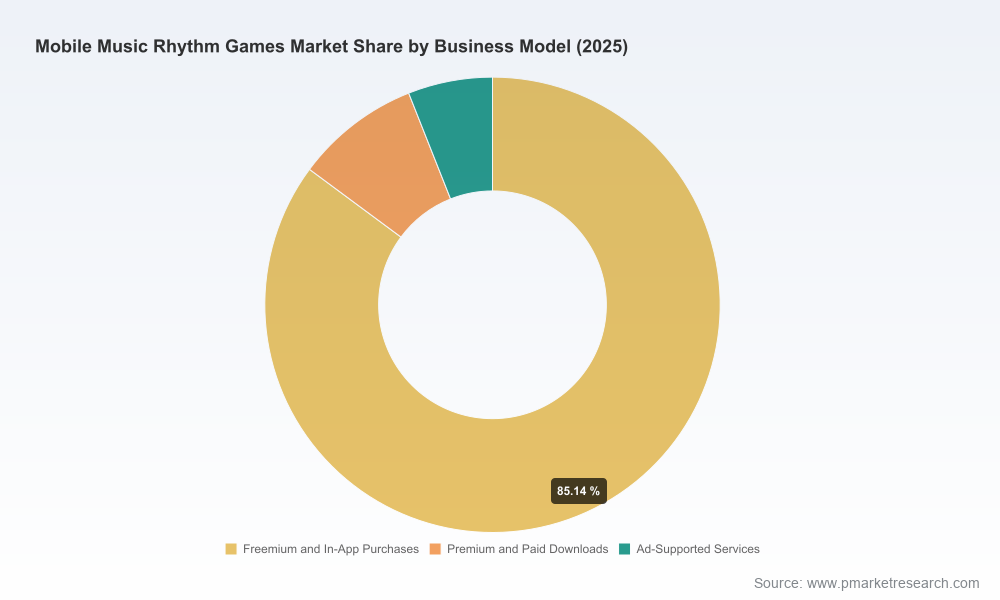
The revenue story is not uniformly distributed across business models. Free-to-play designs augmented by in-app purchases clearly dominate monetization, while premium and paid download structures occupy a much smaller share. Ad-supported services persist as a supplementary layer rather than a primary revenue engine. On the device side, iOS continues to concentrate a larger portion of spending, with Android forming a substantial but less monetization-heavy portion of the ecosystem. Regionally, Asia Pacific stands out as the largest revenue base, followed by North America and Europe, with Latin America and the Middle East and Africa representing smaller but increasingly relevant pockets of opportunity. This uneven distribution matters because it shapes where user acquisition costs, content expectations, and monetization tolerance differ most sharply. Strategic decision-making therefore cannot rely on a single global playbook; instead, it requires segmentation of product design, content cadence, and pricing architecture by market maturity and consumer behavior.
At the same time, the market faces a set of structural challenges that complicate straightforward growth assumptions. First, the elevated concentration among leading players creates a competitive environment where new entrants must either bring distinctive content IP, an unusually efficient user acquisition model, or a compelling technology angle to gain traction. The top group of firms commands a meaningful share of attention and spending, and that concentration makes it harder for smaller studios to achieve standalone scale without partnerships or platform support. Second, the monetization mix is under constant pressure from both platform economics and user expectations. While in-app purchases remain the dominant engine, consumers are increasingly sensitive to perceived value, pacing of content, and fairness of monetization design. This raises the bar for long-term retention and makes content calendars, live operations, and community management central to commercial performance rather than optional service layers. Third, regulatory and platform compliance requirements continue to intensify across major markets. App store policies, age rating expectations, and data privacy obligations impose operational complexity that can affect release timing, feature design, and localization costs. For global publishers, these requirements are not isolated legal concerns; they shape product roadmaps and influence the economics of regional expansion.
From Volume Growth to Value Design: Redefining the Core Battleground
The most important shift in the current market is the transition from raw user growth to durable engagement and monetizable loyalty. Because the installed base in many mature markets has expanded rapidly, incremental success is increasingly determined by the ability to keep players returning, spending meaningfully, and engaging socially around music, characters, or competitive features. This places a premium on content freshness, audio-visual identity, and gameplay variety. In practice, that means the most resilient operators are those that treat rhythm gameplay as a service experience rather than a static product. Expansions, seasonal events, and new song rotations extend lifecycle value, but they also raise production requirements and operational complexity. The commercial implication is that success depends on balancing creative ambition with efficient content pipelines and well-structured in-game economies.
Core Drivers Shaping Market Trajectory
Several interlocking forces are driving the sector’s evolution. While each factor alone matters, the strategic value lies in how they intersect to reshape competitive advantage.
Technology Innovation and New Interaction Models
Advances in client-side performance, audio synchronization, and content delivery are continuously raising the ceiling for what mobile rhythm experiences can deliver. More importantly, the market is witnessing experimentation with novel interaction styles that alter perceived difficulty, accessibility, and player expression. Laneless note design, adaptive difficulty, and hybrid gameplay elements are examples of mechanics that can broaden audience reach while preserving skill ceilings for dedicated players. On the content side, digital avatars, vocal identity licensing, and multimedia crossover partnerships are increasingly integrated into gameplay, turning music rhythm titles into platforms where sound, visual identity, and personality-driven engagement reinforce one another. These developments create opportunities for differentiated product design, but they also demand tighter coordination across development, licensing, and live operations teams.
Worldwide Simulation Business Mobile Game Market
Policy, Platform Governance, and Compliance Pressure
The commercial environment around mobile games remains shaped by platform governance and regional regulatory expectations. App store rules continue to influence in-app purchase architecture, age classification, disclosure practices, and data handling. At the same time, privacy frameworks and consumer protection norms in major markets require careful attention to data collection, targeting, and account management. These conditions create a compliance layer that every global release must absorb. Rather than treating compliance as a separate legal workstream, leading operators embed it into their design process early, which reduces rework and shortens time to market. This is especially important for titles that rely on licensed music, voice content, or cross-border user data flows. The broader point is that regulatory and platform environments are not merely constraints; they also act as filters that reward operators with mature governance, scalable localization, and disciplined product design.
Demand-Side Shifts in Consumption and Community Behavior
Player expectations have evolved alongside broader mobile entertainment habits. Many consumers now approach rhythm games as part of a broader lifestyle experience, blending music fandom, social sharing, and identity expression. This has elevated the importance of recognizable music partnerships, artist-driven content, and visually distinct world-building. In parallel, competitive and achievement-oriented features remain relevant for retaining high-engagement players, while more casual audience segments are drawn by accessibility, visual polish, and short-session playability. The demand curve is therefore not uniform: some users value skill expression and leaderboards, while others prioritize narrative flavor, character collection, or social synchronization. Successful products increasingly need to serve both ends without diluting the core identity of the title. This dual-audience pressure explains why live content planning, community engagement, and social signaling have become central commercial levers rather than peripheral support functions.
Cost Structures, Content Economics, and Supply-Side Realities
The economics of building and sustaining mobile rhythm games are increasingly influenced by content acquisition, production cadence, and the cost of maintaining high-quality audio-visual output. Licensing popular music or distinctive characters can strengthen appeal, but it also introduces negotiation complexity and recurring cost variability. Meanwhile, the need for frequent content updates raises the importance of production efficiency. Studios that can reuse systems, modularize assets, and streamline level design while preserving creative quality gain an edge in long-term operating margins. There is also a growing premium on talent and specialized development capability, especially for teams that can blend music synchronization, balanced difficulty design, and polished feedback loops. As a result, the supply side is increasingly differentiated by operational discipline and creative pipeline management, not simply by access to a concept or IP.
Competitive Landscape and Leading Strategies
The market is populated by a wide range of operators, from large global publishers and technology platforms to specialized rhythm game developers and studios built around particular titles or IP. The competitive pattern is not a simple hierarchy; it is better understood as a layered ecosystem in which scale, content control, licensing access, and product craftsmanship each create distinct forms of advantage.
Racing Games Market
Strategic Positioning Among Major Players
Large platform-oriented and publishing organizations bring advantages in distribution reach, cross-title resources, and the ability to connect rhythm games with broader entertainment ecosystems. Their scale can support sustained marketing investment, regional localization, and diversified content strategies. At the same time, some of the most influential titles in the category originate from specialized developers that have built strong player recognition through distinct gameplay innovation, musical identity, or franchise depth. These studios often compete not by outspending larger rivals, but by delivering a more focused experience that resonates with committed audiences and generates durable community loyalty.
A second strategic axis is content partnership and IP utilization. Some of the most commercially visible games are tied closely to recognizable artists, virtual talents, or established music franchises. In those cases, the rhythm game functions as both entertainment and a content platform, where scheduled releases, character-driven engagement, and fan-aligned programming help sustain attention over time. Where managed well, this model creates strong differentiation and monetization potential. Where mismanaged, it can create dependency on external content calendars or licensing constraints that limit creative flexibility.
A third strategic pattern is mechanical differentiation. Certain developers have gained attention by rethinking note flow, difficulty expression, or visual presentation in ways that broaden the addressable audience or deepen skill-based engagement. This kind of innovation matters because it provides a defensible product identity in a category where many titles can otherwise look and feel similar at a glance. The strongest titles tend to combine a clear mechanical identity with strong audio-visual cohesion and a community-facing live operations strategy.
Market Evolution: Consolidation Pressures and Niche Resilience
The landscape appears to be evolving along two concurrent paths. On one side, concentration pressures continue to favor operators with the resources to sustain live services, secure content partnerships, and compete across regions. These players are well positioned to consolidate attention in mature markets and to expand through portfolio breadth or strategic distribution. On the other side, specialized studios and independent developers continue to find room by targeting underserved tastes, offering distinctive gameplay, or cultivating devoted communities around specific musical styles and design philosophies. In that sense, the market is not simply becoming more consolidated; it is becoming more layered. Large titles can command mass reach, while niche products can achieve strong unit economics within focused audiences.
Recent product and platform announcements also point to this diversification. For example, new mobile rhythm titles are being positioned around digital talent identities and crossover entertainment appeal, with plans for global release and content built around recognizable songs and performances. Separately, other launches are exploring distribution through curated platform environments, indicating that access channels for rhythm games are broadening beyond the traditional app store only model. These developments suggest that future competition will increasingly involve not just which game is best, but where it is available, how it is positioned within a wider entertainment context, and whether the operator can sustain the content and community loop that supports long-term engagement.
Forward Trends and Commercial Opportunities
Looking ahead over the next three to five years, several trends are likely to shape where value is created and where risk concentrates.
Live service maturity will increasingly separate winners from the rest
The market is moving toward a model in which long-term performance depends on the quality of ongoing content delivery, event pacing, and player community stewardship. The commercial opportunity lies in designing content ecosystems that can maintain participation without overextending production budgets. For operators, this means investing in scalable content pipelines, repeatable event frameworks, and data-informed tuning of difficulty and reward structures. The risk is that titles reliant on one-off releases or weak live operations will struggle to hold spending and engagement once initial acquisition effects fade.
IP, music partnerships, and character-driven engagement will remain central but must be managed as strategic assets
Titles with strong musical or personality-driven associations can gain faster recognition and stronger emotional connection. The opportunity is to use such partnerships to build differentiated brand equity and diversified content cycles. However, the dependence on external rights also introduces exposure to licensing timing, creative constraints, and cost variability. Companies that treat IP relationships as long-term assets, with clear operational and creative integration plans, are better placed to convert popularity into durable revenue than those that rely on short-term promotional impact alone.
Accessibility, genre blending, and new distribution experiments will widen the competitive field
Mechanics that increase accessibility, blend rhythm gameplay with other engaging elements, or experiment with distribution through platform partnerships can expand audience reach and improve entry points for new players. The commercial upside is broader top-of-funnel acquisition and the potential to convert more casual players into recurring participants. The uncertainty is that broader accessibility can also raise expectations for polish, content volume, and retention, making it harder to sustain success without a clear retention strategy. In addition, platform-level experimentation may create new opportunities but also new dependency dynamics that operators need to monitor carefully.
Actionable Guidance for Decision-Makers
The strategic implications vary by role, but several themes apply across the board.
For publishers and product leaders
- Prioritize live operations design early. Content cadence, difficulty tuning, and community engagement should be treated as core product features, not downstream services.
- Balance recognizable music or character appeal with original gameplay identity. Dependence on licensed appeal should be complemented by a defensible mechanical and visual core.
- Build regional treatment into the launch plan. Monetization tolerance, content expectations, and compliance requirements differ meaningfully across markets, so product and go-to-market design should reflect that early.
For investors and corporate development teams
- Evaluate exposure to long-term retention economics, not just launch-scale visibility. The most attractive opportunities are often in operators with repeatable content systems and clear community retention levers.
- Assess licensing and partnership dependency carefully. Strong IP alignment can accelerate growth, but sustainable value depends on how well that alignment is operationalized and protected over time.
- Watch for differentiation in distribution and platform access. New release channels and curated platform environments may create opportunities, but also new dependencies that affect bargaining power and reach.
For buyers, partners, and operational strategists
- Treat content integration as a multi-layered commitment. Access to music, artists, or character ecosystems can enhance value, but it should be matched with production readiness and compliance discipline.
- Use clearer segmentation in planning. Different audiences respond to different value propositions, so commercial models should separate casual accessibility from high-skill engagement rather than assuming a single conversion path.
- Prepare for platform and regulatory complexity as a baseline part of global rollout planning, especially where privacy, age rating, and purchase-model rules vary across markets.
The commercial logic of the worldwide mobile music rhythm games market is becoming clearer: growth is real, but competitive advantage now depends on how well companies manage engagement, content economics, compliance, and differentiation at the same time. Executives who treat the category as a live-service entertainment ecosystem, rather than a one-time release opportunity, are better positioned to capture durable value. For teams seeking deeper segment-level insight, a more detailed view of regional dynamics, business model economics, platform distribution patterns, and competitive positioning can be essential for refining entry timing, pricing, partnership strategy, and investment allocation. Further detail on these dimensions is available in the full PW Consulting research report, which expands the market-size context into the granular breakdowns and scenario considerations needed for near-term planning.
PW Consulting
For detailed analysis of this topic, please visit the official page: Worldwide Mobile Music Rhythm Games Market
Lacy Lee
Senior Marketing Manager
sales@pmarketresearch.com
00852-95632430
PW Consulting: www.pmarketresearch.com
More Posts


Report This Post
Please complete the following requested information to flag this post and report abuse, or offensive content. Your report will be reviewed within 24 hours. We will take appropriate action as described in Findit terms of use.
